AI in Physical Retail Is No Longer a Pilot - Vitamin Shoppe and Tecovas at Shoptalk 2026
The Vitamin Shoppe and Tecovas demonstrated at Shoptalk 2026 that AI in physical retail is shipping in days, not quarters - Shoppe Advisor was built by one engineer in two weeks, Boot Runner in 36 hours, and both tools succeed by deepening associate-customer interactions rather than replacing them.
- 1AI in physical retail has shifted from pilot programs to production tools built in days - Shoppe Advisor in two weeks, Boot Runner in 36 hours, Lookout in a weekend.
- 2The winning use case is augmenting the associate, not replacing them - Vitamin Shoppe Health Enthusiasts use Shoppe Advisor alongside customers, and Tecovas Boot Runner keeps associates present during the entire visit.
- 3Clean data infrastructure is the prerequisite - Vitamin Shoppe runs a medallion architecture and syndicates content into LLMs, while Tecovas built an internal MCP server giving every team conversational access to the data warehouse.
One engineer. Two weeks. One app built in 36 hours. And a CTO running seven AI agents simultaneously on his laptop. This is what AI in physical retail actually looks like right now.
Reported by Retailnews.ai
The debate about whether AI works in physical retail is over. The conversation that matters now is who is deploying it well, how fast they built it, and what it is actually doing for the customer standing in the store.
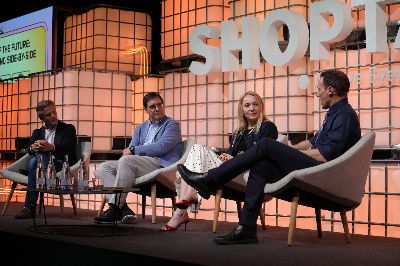
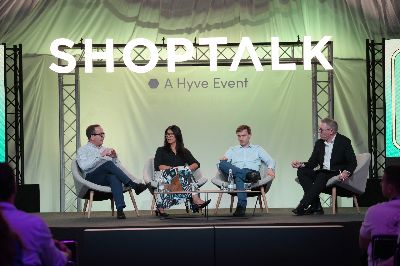
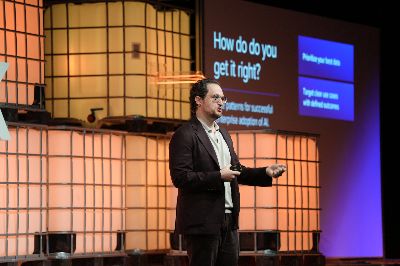
At Shoptalk 2026 in Las Vegas, two brands answered those questions with more specificity than almost anything else heard at the conference. Andrew Laudato, EVP and COO of The Vitamin Shoppe, and Kevin Harwood, Chief Technology Officer of Tecovas, shared their AI stories during the session "AI Applications for In-Store Physical Retail." Their approaches were different in almost every detail. Their conclusions were identical.
The best use of AI in a store is making the human interaction better. Not replacing it.
Start With the Problem, Not the Technology
Laudato opened with the single most useful reframe any retail leader offered at Shoptalk this year. "We did not set out to say, 'How can we use AI in our stores?'" he told the audience. "What we said was, 'How can we provide a better customer experience?'"
That distinction separates the retailers building things people actually use from those building AI features for their own sake. At The Vitamin Shoppe, with 650 stores across the United States, the problem was clear. Health and wellness is one of the most complex, information-dense categories in retail. The company had years of high-quality content: expert articles, wellness videos, product education, nutrition science, and research papers. All of it lived online. None of it was making it into stores.
Shoppe Advisor was built to close that gap.
One Engineer. Two Weeks. Six Hundred and Fifty Stores.
The origin story of Shoppe Advisor is worth telling precisely because of how unglamorous it is. There was no large technology project, no lengthy procurement process, no cross-functional task force. One engineer, [VERIFY: full name of engineer "Danann J"], built the entire thing in two weeks using Cursor, the AI code editor, to vibe-code the application on top of The Vitamin Shoppe's existing API infrastructure.
The result is a digital touchscreen currently live in The Vitamin Shoppe's Innovation Store on New York City's Upper East Side. Shoppers type natural language questions directly into the screen. Someone looking for better sleep, more muscle, or help managing energy levels types that in plain language and receives recommendations drawn from The Vitamin Shoppe's entire content library, including videos, expert articles, and product information, surfaced through semantic search rather than keyword matching.
The next step is more significant than the launch itself. The code and logic behind Shoppe Advisor will be transferred to iPads deployed across all 650 The Vitamin Shoppe retail stores, putting the tool directly in the hands of Health Enthusiasts everywhere, not just in New York.
The Unexpected Result: Associates Use It More Than Customers
When Shoppe Advisor launched, the assumption was that it would function primarily as a self-service tool for customers browsing independently. What actually happened was more revealing.
Five Things Friday
Five useful signals from the people shaping global retail. Every Friday.
[VERIFY: spelling of "Uman Chan"], Senior Director of Digital Technology at The Vitamin Shoppe, described the outcome in a post-session interview: "Most of the time the customer is actually using it alongside with the Health Enthusiast. This is a really good example of what we strive to do, which is to have technology really deepen that human connection rather than working around it. It is not to replace the conversation, but really to deepen it."
Associates are walking customers over to the screen and using it as a shared reference point in the conversation. Instead of stepping away to find an answer, they stay present. The interaction gets richer. The customer gets better guidance. The technology disappears into the background of a better human moment.
Laudato's framing of the associate benefit was direct: "AI will take away the worst part of your job."
The Vitamin Shoppe is reinforcing this with a tool called Elevate, built on Axonify, a gamification-based learning platform. Each day when Health Enthusiasts clock in, they answer one or two questions. The AI tracks where each person is in their learning journey and adapts accordingly. A first-week associate gets foundational content. A ten-year veteran gets challenged on emerging ingredients and new science. The system makes continuing education feel like a game, complete with contests, swag, and a golf mini-game that Laudato admitted he cannot stop playing himself.
Tecovas: AI in Service of "Radical Hospitality"
Tecovas is a different kind of brand with a different kind of problem, and the contrast makes both stories stronger.
The Austin-based Western wear brand, which opened its 60th store in Tulsa, Oklahoma, the day before Shoptalk, has built its entire retail identity around what Harwood calls "radical hospitality." Stores have open bars serving whiskey, vodka, tequila, and ranch waters. Associates use blowtorches to brand boots with customers' initials, wedding dates, or company logos. Live music plays. Hats get shaped and customized on site. Twenty percent of Tecovas store floor space is dedicated to experience rather than selling, likely the highest ratio of any retailer operating at this scale.
In that environment, the moment an associate has to leave a customer is not just inefficient. It is a breach of the brand promise.
"The worst thing that happens is that associate leaves, that person walks away for five or ten minutes to handle something, and then comes back, and that customer just feels a little lonely in that process," Harwood said. That was the problem AI needed to solve. Not inventory in the abstract. That specific, damaging moment.
Boot Runner: Built in 36 Hours, Deployed Across 60 Stores
Before Boot Runner, Tecovas store associates used radios to request inventory from the stockroom. On a busy Saturday, with fourteen requests coming in simultaneously, the process was chaotic, slow, and pulled associates away from the floor at exactly the wrong moment.
Harwood and his team built Boot Runner in 36 hours using AI-assisted development tools. The app is now deployed across Tecovas stores. Associates request inventory digitally. The product arrives in front of the customer in an average of 85 seconds. The associate never leaves.
"We put our entire inventory position into our associates' hands, where they can make recommendations to the customer in the moment. They can stay present in that conversation with the customer. And if we don't have a size they're looking for, we can immediately recommend another product to them that we do have in stock," Harwood said.
The 36-hour build time is as important as the result. A problem that would previously have required weeks of backlog planning, sprint cycles, and engineering resources was solved over a long weekend. That compression changes everything about how Tecovas thinks about building retail technology.
Lookout: The Third Tool Tecovas Quietly Built
Boot Runner attracted the most attention, but Harwood described a third AI tool that deserves equal coverage. Lookout is an AI agent that monitors events across each Tecovas store's metropolitan statistical area: country music concerts, sporting events, conferences, conventions, and anything else happening nearby that might affect traffic and sales.
Previously, store managers built these event lists manually and shared them by email with the planning team, who fed them into staffing models. The process was slow, inconsistent, and entirely dependent on what individual managers noticed or remembered to log.
Lookout automates the entire process. It manages a live event calendar for every store location, scores each event for its expected traffic impact, and feeds those scores directly into planning and staffing models in real time. It was built in a weekend by one engineer and one product manager.
Invent.ai: Hedge Fund Math Applied to Cowboy Boot Inventory
Beneath the apps is a deeper operational transformation. Tecovas partnered with Invent.ai to tackle one of footwear retail's most structurally complex challenges: inventory allocation across a rapidly growing store network.
The complexity is not theoretical. Men's footwear at Tecovas comes in [VERIFY: 13 sizes in regular width and 13 sizes in wide width per style], and boot boxes are large, which creates tight physical constraints in every backroom. The allocation questions are endless. If one transfer slot remains, should it go to a size seven or a size seven and a half? Which of three stores competing for the last unit of a popular style should receive it? How do you reserve shelf space for a product launching in two weeks?
Invent.ai applies what Harwood describes as "hedge fund level math" to each individual SKU position across the entire retail network, calculating the highest likelihood of selling a specific unit at the highest profit and allocating accordingly. [VERIFY: source of pilot numbers - on-stage claim or Invent.ai case study]: A pilot comparing 26 AI-managed stores against 26 human-managed stores showed a 9.6 percent revenue lift in AI-managed categories and a 2 percent overall improvement in in-stock rates, achieved on reduced overall inventory levels. New product sales increased by 20 percent, and weighted in-stock rates for newly launched items improved by 1.2 percent.
"It's completely changed the way we manage our most important asset in retail, which is our inventory," Harwood said. "We're allocating smarter. We're replenishing faster. We've got better product launches as a result."
"The Models Are Better Than Me"
The session's most candid moment came when Harwood described how completely AI has transformed his engineering team's daily reality.
"The second week of December of last year, the models reached a point where they are better at creating software than the best engineers you have on your team," he said. "I told my CEO in February: the models today are better than me."
He runs seven to ten Claude agents simultaneously on his computer at any given moment, each experimenting with a different idea and generating code faster than any human engineer could. His entire engineering team operates the same way. Features requested by store teams in the field are being developed and deployed to production within an hour or two of the request, with associates using those features in the retail store shortly after.
Code itself, he said, has become almost disposable. The only question that matters is whether the output works. If it does not, there are six other agents trying six other approaches simultaneously.
Data: The Foundation Everything Else Depends On
Both leaders were emphatic that none of this works without clean, reliable data underneath it. And both arrived at the same core principle through different paths.
Laudato said The Vitamin Shoppe built its data infrastructure using a clean room and medallion architecture from the ground up. His operating principle: incomplete data is better than wrong data. The company also syndicates its entire content library, including research papers and expert articles, into large language models so that The Vitamin Shoppe's expertise surfaces when shoppers begin their health journey inside an AI tool rather than on a brand website. "People are starting not on Google or on the brand website," he said. "They're starting on AI. We want to make sure that LLM recommends the best products, which of course would be The Vitamin Shoppe products."
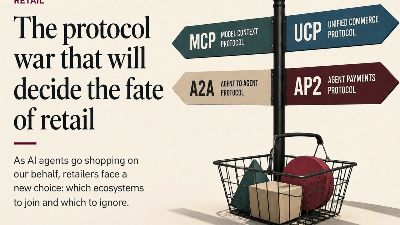
Harwood said Tecovas has built an internal MCP server sitting on top of its data warehouse, giving teams across the entire company the ability to interact conversationally with raw data. A plain-language prompt can now surface insights that previously required a human to write SQL queries, build tables in Tableau, and wait days for results. "I have been absolutely blown away by what's possible if you give agents just raw access to your data," he said.
Both leaders are also focused on AI search optimization, ensuring their content is structured for discoverability not just on Google but inside the AI tools increasingly shaping where purchase journeys begin. Harwood acknowledged this is one of the hardest problems to keep up with right now. "It changes by the day," he said. "I don't even really have a good way to think about who is providing my best surface to these different tools. These are problems we're trying to solve in real time."
What Retail Looks Like in Five Years
The session closed with a question about the five-year vision, and both answers were more grounded and more human than most AI predictions tend to be.
Laudato reached back to invoke Andy Griffith. "If you watch old TV shows, you see these little country stores where people walk in and they know your name, they know what you want, and the local store would carry something just for you." With 650 stores and AI that can personalize at the individual level, he believes The Vitamin Shoppe can recreate that experience at national scale. "Ironically, if we do this technology right, it could take us back to a time when retail was more personal and more one on one."
Harwood made the counterintuitive bet that physical retail will become more important, not less, as AI develops. "AI is not going to replace the physicality of a great retail experience. If AI tools develop at the pace we think they will, people may find themselves with more time on their hands to be doing more physical things in the real world. And so by investing in physical retail, in making a place where people want to come and have community, that is a canvas I am excited about building technology for."
Twenty percent of Tecovas floor space dedicated to experience. Open bars. Live music. Boot shining. Branding-iron customization. That is not a brand hedging its bets on the future of stores. That is a brand placing a very large, very deliberate bet that the physical experience is the one thing AI cannot replicate, and that AI's job is to protect the time and attention required to deliver it.
Frequently Asked Questions
What is the key point of "AI in Physical Retail Is No Longer a Pilot - Vitamin Shoppe..."?
- The Vitamin Shoppe and Tecovas demonstrated at Shoptalk 2026 that AI in physical retail is shipping in days, not quarters - Shoppe Advisor was built by one engineer in two weeks, Boot Runner in 36 hours, and both tools succeed by deepening associate-customer interactions rather than replacing them.
Start With the Problem, Not the Technology - what does it mean?
- Laudato opened with the single most useful reframe any retail leader offered at Shoptalk this year. "We did not set out to say, 'How can we use AI in our stores?'" he told the audience.
One Engineer. Two Weeks. Six Hundred and Fifty Stores - what does it mean?
- The origin story of Shoppe Advisor is worth telling precisely because of how unglamorous it is. There was no large technology project, no lengthy procurement process, no cross-functional task force.
The Unexpected Result: Associates Use It More Than Customers - what does it mean?
- When Shoppe Advisor launched, the assumption was that it would function primarily as a self-service tool for customers browsing independently. What actually happened was more revealing.
Tecovas: AI in Service of "Radical Hospitality" - what does it mean?
- Tecovas is a different kind of brand with a different kind of problem, and the contrast makes both stories stronger. The Austin-based Western wear brand, which opened its 60th store in Tulsa, Oklahoma, the day before Shoptalk, has built its entire retail identity around what Harwood calls "radical hospitality." Stores...
Related coverage
Shoptalk
JD Outdoors Left Its Legacy Ecommerce Platform Behind to Accelerate Innovation
Jul 6, 2026
Shoptalk
Meta Declares the Era of Link in Bio Over as It Puts Creators at the Heart of Commerce
Apr 28, 2026
Shoptalk
A Shift You Can't Ignore: Inside Retail's Changing Consumer Mindset
Apr 1, 2026
Shoptalk