Unlimitail, Douglas, Nectar360 on Retail Media's Next Chapter
Retail media is evolving beyond ad sales to focus on platforms, insights, and measurable outcomes, with Unlimitail, Douglas, and Nectar360 leading structural transformations to enhance collaboration, data, and AI-powered personalization.
- 1Next-generation retail media prioritizes sophisticated data capabilities and AI-powered personalization, as evidenced by Nectar360's Pollen platform, which automates audience building in seconds and creative resizing in 90 seconds, unifying in-store, onsite, and offsite environments.
- 2Retail media success hinges on building technology platforms and unlocking customer insights, with Nectar360's analysis revealing that omnichannel campaigns across in-store, onsite, and offsite channels generate a significant multiplier effect compared to single-channel efforts.
- 3Organizational structures for retail media are diverse yet share a common philosophy: Unlimitail operates as a separate joint venture of Carrefour and Publicis Groupe, Douglas Marketing Solutions is a wholly-owned subsidiary leveraging Douglas Group's 62M loyalty members, and Nectar360 (Sainsbury's) maintains an arm's-length relationship to offer agency-like services.
Retail media has quickly become one of the fastest-growing sectors in commerce, but as the industry matures, success is becoming less about selling advertising inventory and more about building technology platforms, unlocking customer insights and delivering measurable business outcomes.
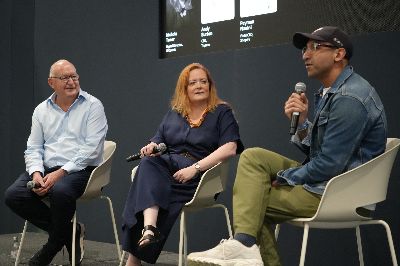
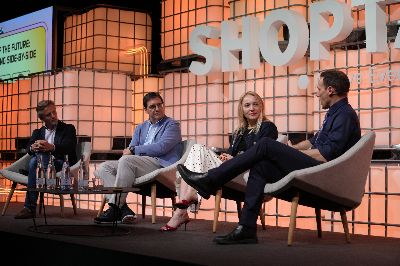
That was the central message from executives representing Unlimitail, Douglas Group, and Nectar360 during a panel discussion at Shoptalk Europe titled "Think Like an Agency, Grow Like a Retailer," moderated by Ben Miller, VP of Original Content & Strategy at Shoptalk, where leaders explored how retail media networks are evolving to meet the changing expectations of brands and retailers.
While every organisation has taken a different path, the panel agreed that the next generation of retail media will be defined by stronger collaboration, sophisticated data capabilities and AI-powered personalisation.
Three Different Structures, One Shared Philosophy
Each panellist runs their retail media business under a genuinely different corporate structure, and the session opened by exploring what that means in practice.
Thibault Hennion, Chief Operations Officer at Unlimitail, is responsible for IT, data, and ad tech right across the network, and he described his organisation as the product of two parents. Unlimitail is a joint venture between Carrefour and Publicis Groupe, but operates as a fully separate entity with its own offices, IT systems, invoicing, and customers. Neither parent is even its largest client. "It''s a bit like my father is an agency and my mother is a retailer," Hennion said. "The idea from the beginning was to leverage both knowledge sets for the benefit of the retail media market as a whole, providing services for agencies and for retailers alike."
Charina Lumley, Managing Director of Marketing Solutions at Douglas Group, runs a different model entirely. Douglas Marketing Solutions is a wholly owned subsidiary working exclusively with Douglas as its sole retail partner, but it operates in close coordination with the wider group''s social, CRM, loyalty, and co-op marketing teams. "Our promise is to be a brand-building powerhouse for the brands we work with," Lumley said, noting that Douglas Marketing Solutions is only six years old, operating inside a Douglas Group with more than a century of history.
Amir Rasekh, Managing Director of Nectar360 at Sainsbury''s, has lived through the longest evolution of the three. Nectar360 began life 15 years ago as a joint venture and has been wholly owned by Sainsbury''s for the past decade, operating the Nectar loyalty scheme alongside the retail media networks for both Sainsbury''s and Argos. The deliberate choice, Rasekh explained, was to remain a separate trading entity operating at arm''s length. "Clients don''t want a retailer-supplier relationship," he said. "They want an agency service in the retail media space."
Hiring for Chemistry, Not Just Capability
All three executives converged on a strikingly similar philosophy when asked how they build genuinely agency-minded teams inside retailer-owned or retailer-adjacent organisations.
"When I''m thinking about hiring, I think about two things: are they smart, are they nice," Rasekh said. "And then I think about the technical capabilities." Around 40% of Nectar360''s original team from the joint venture days fifteen years ago remain with the business, something Rasekh credits with preserving the agency mindset and entrepreneurial spirit even as the organisation has matured and scaled.
Lumley echoed the sentiment almost exactly. "We look for kindness and we look for chemistry, and then the technical skills come afterwards," she said. "If they fit the whole ecosystem we''re trying to build, we can teach the technical deficiencies." Her team, drawn largely from agency backgrounds, brings strategic client-first thinking and full-funnel creative skill, but the harder ongoing work is teaching that team to understand how a brilliant marketing campaign actually connects to demand planning, category management, and supply chain realities inside a retail environment.
For Hennion, the talent question splits cleanly along functional lines. The technology, operations, and data side draws people from the technology and retail industries directly. What requires a genuinely agency-shaped mind is the commercial architecture itself: understanding how to take existing retailer assets, customer data, inventory, brand relationships, and turn them into new lines of value for brands and agencies. "Retail media sits exactly at the sweet spot between the retailer side of the world and the agency side," he said.
Why Data Matters More Than Advertising Technology
Although retail media is often associated with advertising platforms, the panel argued that technology alone is not enough.
Five Things Friday
Five useful signals from the people shaping global retail. Every Friday.
Hennion compared the discipline to medical diagnosis. Before any media is activated, a retailer needs an accurate read on customer and business data, the same way a doctor needs a clear diagnosis before writing a prescription. Whether the eventual prescription is an onsite campaign, an offsite activation, a loyalty initiative, or a social acquisition campaign, the quality of that decision depends entirely on the quality of the underlying analysis. "Ad tech is only the tool," he said. "What really matters is the fundamental diagnosis of how a brand behaves within a specific retail environment."
Unlimitail''s own approach to building that capability is deliberately modular rather than built entirely in-house. The business selects a cloud foundation and layers additional capability on top, investing most heavily in the customer-facing dashboards and interfaces that brands and agencies actually interact with day to day.
Nectar360''s Pollen: AI Built to Unify, Not Just Automate
Among the most significant technology stories discussed during the session was Pollen, Nectar360''s AI-powered retail media platform, which the company describes as a blend of buy and build that is becoming increasingly proprietary over time.
Rasekh explained that clients consistently ask for two things: genuine ease of use, and returns that outperform every other media channel available to them, even when those other channels are notoriously difficult to measure against. Pollen was built specifically to answer both demands by unifying in-store, onsite, and offsite environments within a single technology and data stack, enabling self-service alongside managed campaign delivery, and finally addressing what Rasekh called "the measurement conundrum" around multi-touch attribution and incrementality.
The platform automates work that previously consumed enormous amounts of time. Building a customer audience from a campaign brief, which used to take days of manual targeting work, now happens in seconds. Creative resizing across the many different formats required across online and physical store environments, work that used to take a team three weeks, now takes approximately 90 seconds inside the platform. Rasekh was clear that this is only the first version of Pollen, with creative scoring and in-flight optimisation already live and considerably more capability still to come.
Omnichannel Campaigns Are Outperforming the Sum of Their Parts
As retail media expands into physical stores, measurement has become significantly more complex, and Rasekh argued this is exactly where the next real competitive advantage lies.
Early analysis from Nectar360, drawn from multi-touch attribution data across Pollen, confirmed something the team had long suspected but struggled to prove while data sat in three disconnected environments: campaigns spanning in-store, onsite, and offsite generate a genuine multiplier effect compared with any single channel running alone. Last-click attribution, Rasekh noted, has always taken the credit, when the reality is that different channels are playing genuinely different roles throughout the customer journey.
"I once heard someone say customers love more ads," Rasekh said. "I don''t think that''s the case. What customers actually like is personalisation of their journey with a brand and retailer, being served the products they love or are likely to love, at the right moment."
Bringing that personalisation into the physical store is harder than doing it online, and Rasekh was candid about the practical work involved. Sainsbury''s and Argos both required serious investment in connectivity, Wi-Fi coverage across the store estate, and tools like the Scan and Go handsets, known internally as Smart Shop, that let Sainsbury''s deliver tailored offers directly to a customer''s device mid-shop. Fully personalised digital screens remain harder to achieve than handset-based personalisation, but Nectar360 has worked to make screen placement and content at least contextually relevant, based on time of day and which products a specific store location tends to over-index on.
Douglas: Why Building Theatre Doesn''t Always Mean Building Technology
For Charina Lumley, retail media must strengthen brands rather than simply generate impressions, and that philosophy shapes everything about how Douglas Marketing Solutions operates.
Douglas works with prestige brands, Chanel, Yves Saint Laurent, Lancôme, and L''Oréal among them, that already carry deep global recognition and emotional affinity with consumers. "It''s not our job to create or protect the Chanel brand," Lumley said. "Our job is to identify who in the Douglas universe is purchasing that brand, because they might look different from that brand''s global audience." That requires deep customer insight drawn from Douglas''s loyalty database, which Lumley described as more than 62 million beauty card holders, mapped against where and when customers shop, in what format, and whether they linger in store for an hour or are simply popping in online for a quick replenishment.
Douglas Marketing Solutions has deliberately chosen not to build proprietary technology. With a team built largely from agency backgrounds and only six years of organisational history, Lumley was candid that engineering capability simply is not where the business currently competes. Instead, the company treats its technology partners as what she called "sparring partners," conducting rigorous internal analysis of its own capability gaps so it can bring in the right specialist solution for each specific need rather than trying to build everything internally.
Where Douglas believes it has a genuine structural advantage is in its 1,900 stores across 22 countries, each staffed with at least 15 trained beauty advisors capable of delivering real-time, in-person personalisation that no digital screen can fully replicate. The challenge, Lumley acknowledged, is that this kind of personalisation does not scale easily, particularly when new products are launching almost daily across thousands of stores. Her ambition for the in-store retail media layer is to create what she called a cinematic, theatrical experience, language she borrowed directly from a recent conversation with Christian Louboutin''s team about their own approach to physical retail. "How do we make a standout feeling for the customer and for the brand," she said, "in an environment that is already so dense with choice?"
Hennion added a useful caution to that ambition from Unlimitail''s broader market view: dynamic in-store digital content does genuinely work, including in food retail and general merchandise where the customer mission is very different from beauty, but only when it is deployed at the right moments in a customer''s journey rather than blanketing stores with screens. The formats that perform best, in his experience, are those tied closely to a specific shopper mission and supported by clean measurement, rather than added simply because the screens exist.
Collaboration as a Structural Necessity
Collaboration emerged as the final shared theme. Every panellist returned to the idea that retail media can no longer sit in a silo. Closer alignment with merchandising, loyalty, supply chain and brand teams inside the retailer, and with agencies and brand partners on the outside, is now treated as a structural necessity rather than a nice-to-have.
As retail media enters its next stage of maturity, competitive advantage will come less from selling advertising space and more from combining AI, customer intelligence, and genuinely cross-functional collaboration into a unified growth platform. For retailers, that transformation may ultimately redefine retail media from a marketing channel into one of the most strategic capabilities within modern commerce.
Related coverage

Technology
Amazon Alexa+ Tablets Run Android, Sell at Target and Best Buy
Oct 11, 2026
Technology
Cybersecurity Is Now a Board Issue, Not Just a Technology Problem
Sep 8, 2026
Technology
Jabra Bets on Voice as the Gateway to AI for Retail's Frontline Workers
Aug 17, 2026
Technology