From Products to Ecosystems: Nagarro's Vision for the AI-Powered Future of Retail
Nagarro's Rahul Mahajan argues AI's real retail impact is architectural: granular demand forecasting, conversational enterprise systems and agentic ecosystems that turn retailers into orchestrators of products and services.
- 1AI can make demand forecasting SKU-level, adapting models to the signals that actually move each product.
- 2Generative and agentic AI let employees query systems in natural language and connect new ecosystem partners at runtime.
- 3Durable advantage sits in proprietary data, governance and semantic architecture, not in any single AI model provider.
Retail has no shortage of artificial intelligence experiments. The harder question is what happens when AI stops being an experiment and starts changing the architecture of the business itself.
For Rahul Mahajan, Global CTO and Vice President at Nagarro, that transition is already creating a fundamentally different conversation with retailers and consumer businesses.
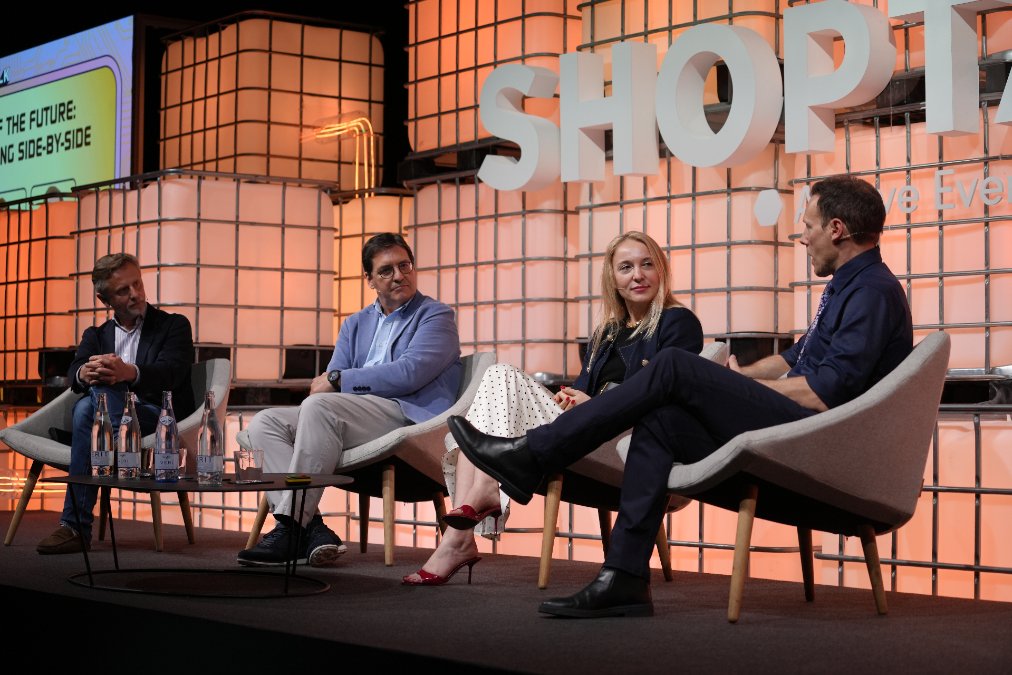
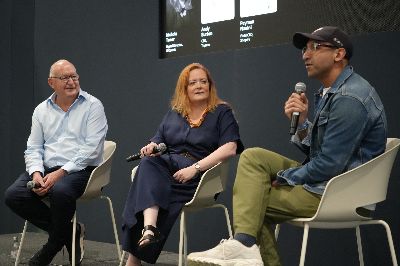
Speaking with Alex Rezvan, Founder of The Retail Podcast, Mahajan outlined a future in which AI does considerably more than automate existing processes. It could reshape demand planning, make enterprise systems conversational, connect businesses dynamically with external partners and allow retailers to evolve from sellers of products into orchestrators of much broader consumer ecosystems.
That distinction matters. The next competitive advantage in retail may not come from using AI to do today's work faster. It may come from using AI to build a business that could not have operated in the same way before.
Retail Complexity Is Breaking Traditional Demand Planning
Demand forecasting illustrates the problem. A major consumer brand today rarely sells through a single channel. It might operate brand-owned stores while simultaneously selling through its own e-commerce operation, third-party retailers, global marketplaces and specialist platforms across multiple countries.
Mahajan described Nagarro's work with a large consumer goods business operating across exactly this kind of fragmented environment. The complexity is not simply the number of channels. It is the number of signals capable of changing demand.
Historical sales still matter. Promotions matter. Seasonality matters. But so do competitor price changes, marketplace activity and influencers suddenly discussing a product. A skincare product can experience a change in demand because someone talks about it online. A competitor can alter pricing. A seasonal event can cause sales to accelerate unexpectedly.
The traditional forecasting challenge has therefore become considerably more dynamic. Mahajan argues that AI creates an opportunity to make forecasting more granular. Rather than applying essentially the same forecasting logic across an assortment, models can potentially determine which variables matter most for particular SKUs or categories.
The ambition, as he described it, is to explore whether every SKU could effectively have a model adapted to the signals most relevant to it. For retailers managing enormous assortments, that is an important shift. Instead of forcing every product through the same forecasting methodology, AI can increasingly help the methodology respond to the product.
What If Employees Could Talk to Their Systems?
Better forecasting is only part of the opportunity. The way employees interact with enterprise technology could also change.
Retail software has traditionally required users to understand the software. Employees navigate dashboards, select filters, interpret reports and learn where information sits inside increasingly complicated systems. Generative AI offers the possibility of reversing that relationship.
Mahajan gave the example of a demand planner asking a system a straightforward question in natural language: which SKUs are ageing in my region? Instead of requiring the planner to find and manipulate the underlying data manually, an AI-enabled system could identify the relevant products and potentially suggest actions, including promotional strategies such as discounts or buy-one-get-one offers.
Five Things Friday
Five useful signals from the people shaping global retail. Every Friday.
Mahajan describes this broader ambition as humanising how people consume technology and personalisation. It could become one of generative AI's most consequential effects on the retail workforce. For decades, companies have trained people to communicate in the language of software. AI increasingly allows software to communicate in the language of people.
The Bigger Shift Is Beyond Products
Mahajan's most significant argument, however, extends beyond operational efficiency. He believes businesses need to reconsider what constitutes their offering in the first place.
"It's not just about products anymore," he said during the discussion.
Retailers and brands increasingly operate within ecosystems encompassing their own products, partner products and external services. The opportunity is to connect those elements around what the customer is actually trying to achieve.
Consider buying a car. The customer may not simply want a vehicle. They may need accessories appropriate for where they drive, insurance, servicing and other related products or services. A retailer or brand capable of understanding that wider objective could potentially bring together its own offering with relevant partners and present the customer with a coherent solution.
Mahajan sees the opportunity as moving beyond individual transactions and becoming more deeply embedded in customers' lifestyles. That is a radically different proposition from conventional cross-selling. The objective is not simply: what else can we sell? It becomes: what is this customer trying to accomplish, and how can our ecosystem help them accomplish it?
The Pharmacy Could Become a Wellness Ecosystem
Pharmacy provides an especially useful example. Mahajan described a retail pharmacy business that does not want its future to be defined solely by selling medicine. It wants to expand into broader lifestyle services, potentially encompassing areas such as diet and wellness.
That transforms the relationship with the consumer. A transactional pharmacy sells a product when the customer needs it. A lifestyle and wellness ecosystem attempts to support a much broader objective over a much longer period of time.
Mahajan argues that making this transition requires a very different technological architecture and a different approach to AI. It also speaks to one of retail's biggest strategic questions. If marketplaces can make products increasingly easy to find and buy, what value does the retailer provide beyond access to inventory? For some businesses, the answer may increasingly be expertise, orchestration and services.
Agentic AI as Connective Infrastructure
There is an obvious technical problem with this vision. Ecosystems change constantly. A retailer might add an insurance company today, a home-service provider tomorrow and another specialist partner next month.
Traditional software architecture often relies on predefined workflows connecting systems and services. But continuously engineering new workflows every time the ecosystem changes can become slow and expensive.
Mahajan sees agentic AI as part of the answer. Instead of attempting to hard-code every possible combination of services, agentic systems could potentially adapt at runtime and help connect new providers into broader customer journeys.
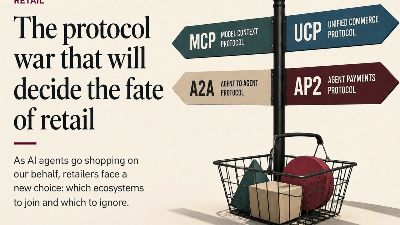
That is an important interpretation of agentic commerce. Much of the industry's attention has focused on AI agents acting on behalf of consumers, finding products, comparing prices or eventually making purchases. But agents could be equally important behind the scenes. They could help coordinate the network of businesses, information and services required to fulfil increasingly complex consumer needs. The retailer then becomes less like an isolated seller and more like the orchestrator of an intelligent network.
The Real AI Challenge Sits Underneath the Interface
None of this can be achieved simply by attaching a large language model to existing retail systems. Mahajan repeatedly returned to the importance of architecture.
Retail information no longer exists only in neatly structured databases. Relevant intelligence may sit in transactional systems, product information, images, video, social content and other unstructured or multimodal sources. Imagine an influencer explaining a new way to use a beauty product. That information could potentially be relevant to future recommendations or customer advice. But first the business needs a way to connect it with everything else it knows.
Mahajan highlighted knowledge graphs, vectorisation and new semantic layers as important components of the emerging architecture. The underlying principle is straightforward: organisational knowledge needs to become understandable and accessible through language. Language can then become a bridge between employees and data, between consumers and brands, between AI models and enterprise information, and increasingly between different intelligent systems.
AI Governance Is About More Than Privacy
As AI becomes more deeply involved in decisions, retailers also face a more difficult question: can they explain what happened?
If an AI-enabled system influences demand planning, recommendations or customer advice, businesses may need to understand exactly how that outcome was produced, including which model was used, which version, what data informed the decision, where that data originated, who had access to it and what was approved.
Mahajan argues that AI governance consequently needs to encompass areas including observability, model and data versions, lineage, access rights and privacy requirements such as GDPR, CCPA and India's data protection legislation.
But his definition of governance goes further. AI also needs to sound like the brand. That may appear a relatively minor consideration compared with security or privacy, but it becomes increasingly important as generative interfaces take over more customer interactions.
Mahajan used beauty as an example. A brand's marketers may describe a hair concern using carefully chosen language that differs from the terminology a computational system would naturally generate. If AI becomes a customer-facing representative of the business, controlling its vocabulary and tone becomes part of protecting brand identity.
In other words, AI governance is not only about ensuring that a machine is allowed to answer. It is also about ensuring that it answers as the brand.
Do Not Build the Future of Your Business Around One AI Model
The extraordinary pace of AI development introduces another risk: dependency on a single model provider. Today's strongest model may not be tomorrow's.
Mahajan pointed to the rapidly changing competition among platforms from companies such as Google, Anthropic and OpenAI. Businesses therefore increasingly want systems with a degree of interoperability, allowing them to use one model today and potentially another in the future.
That has major architectural implications. A retailer's proprietary advantage should not live entirely inside one external model. Its vectors, governance, grounding, semantic architecture, business rules and proprietary knowledge need to remain sufficiently independent to operate across changing AI technologies.
The model is not the AI strategy. Models will improve. Providers will change. Costs will change. Capabilities will change. The durable competitive advantage is more likely to come from the proprietary data, architecture, workflows, expertise and customer experience surrounding those models.
Personalisation Is Becoming More Human and More Complex
This thinking aligns with Nagarro's wider work around what it calls humanised AI-led personalisation. The company argues that effective personalisation increasingly requires the convergence of data, analytics and human-like AI interactions, with agentic systems capable of coordinating more contextual experiences.
Mahajan discussed recent patent activity around areas including humanising personalisation and AI-generated advisory experiences, noting approximately 15 patents in areas spanning personalisation, data and marketing analytics, alongside a recently filed provisional application in India focused specifically on humanising personalisation. The conversation does not provide enough independently verifiable detail to identify individual applications or their legal status beyond what he stated.
Traditional personalisation asks: which product is this customer most likely to buy? The emerging model can ask: what does this person need, what context are they in, which products and services could help, and how should the brand communicate that answer? That is much closer to advice than recommendation. And it potentially changes the role of the retailer.
Nagarro Is Betting on an AI-Native Enterprise
The scale of Nagarro provides useful context for these ideas. Nagarro reported 999.3 million euros in revenue for FY2025 and 18,003 professionals as of 31 December 2025. The company operates globally and is listed on the Frankfurt Stock Exchange.
In 2026, the company has been framing its broader strategy around what it calls Fluidic Intelligence, an operating concept built around closer collaboration between people and AI, more fluid organisational knowledge and better information flow across enterprises.
Mahajan's retail vision fits within that wider direction. The argument is not that every process should suddenly become autonomous. It is that businesses should reconsider which organisational constraints exist because of genuine commercial requirements and which exist simply because previous generations of technology could not operate differently.
Future-Proofing Retail Means Asking a Different Question
Retailers already have hundreds of potential AI use cases: search, recommendations, customer service, marketing, forecasting, content creation, fraud detection, inventory optimisation and personalisation. The temptation is to create a list, calculate the ROI of each and begin implementing them one by one.
Mahajan's argument suggests leaders should also ask a more fundamental question: what would we design differently if AI had always existed?
Would demand planners still navigate the same dashboards? Would every SKU use the same forecasting methodology? Would a pharmacy define itself around medicines rather than wellbeing? Would a retailer build fixed integrations for every new partner? Would a global business tie its intelligence permanently to one AI provider? Would personalisation still mean recommending another product?
Those questions move the conversation away from AI implementation and towards business redesign.
Mahajan describes the broader opportunity as businesses moving from product providers towards more complete product-and-service ecosystems, embedding themselves more deeply in consumers' lifestyles rather than remaining focused on isolated transactions. That may prove to be one of the defining distinctions of the AI era.
The retailers that gain the most from artificial intelligence may not be the companies with the most AI tools. They may be the companies that understand what those tools allow them to become. Because future-proofing retail is ultimately not about predicting which AI model wins. It is about building a business capable of changing when the answer inevitably does.
Frequently Asked Questions
What is the key point of "From Products to Ecosystems: Nagarro's Vision for the..."?
- Nagarro's Rahul Mahajan argues AI's real retail impact is architectural: granular demand forecasting, conversational enterprise systems and agentic ecosystems that turn retailers into orchestrators of products and services.
Retail Complexity Is Breaking Traditional Demand Planning - what does it mean?
- Demand forecasting illustrates the problem. A major consumer brand today rarely sells through a single channel. It might operate brand-owned stores while simultaneously selling through its own e-commerce operation, third-party retailers, global marketplaces and specialist platforms across multiple countries.
What If Employees Could Talk to Their Systems?
- Better forecasting is only part of the opportunity. The way employees interact with enterprise technology could also change. Retail software has traditionally required users to understand the software.
The Bigger Shift Is Beyond Products - what does it mean?
- Mahajan's most significant argument, however, extends beyond operational efficiency. He believes businesses need to reconsider what constitutes their offering in the first place. "It's not just about products anymore," he said during the discussion.
The Pharmacy Could Become a Wellness Ecosystem - what does it mean?
- Pharmacy provides an especially useful example. Mahajan described a retail pharmacy business that does not want its future to be defined solely by selling medicine. It wants to expand into broader lifestyle services, potentially encompassing areas such as diet and wellness.
Related coverage

Technology
Cybersecurity Is Now a Board Issue, Not Just a Technology Problem
Sep 8, 2026
Technology
Jabra Bets on Voice as the Gateway to AI for Retail's Frontline Workers
Aug 17, 2026Technology
NVIDIA's Vision for AI in Retail: Shopping Assistants, Digital Twins and the Rise of Physical AI
Aug 7, 2026
technology
H2O Retailing Rebuilds Japanese Retail Around Unified Commerce
Jul 22, 2026
Jabra Bets on Voice as the Gateway to AI for Retail's Frontline Workers
Andrew Doyle, VP for Frontline Workers at Jabra, argues that voice is becoming the natural interface between retail associates and AI agents - and that audio quality decides whether those systems work on the shop floor.
Continue readingMore in Technology
🔍 Explore related coverage