Lagardère Travel Retail's Real Growth Problem: Orchestration
Lagardère Travel Retail's Charlotte Delmas told NRF Europe that growth created complexity, so the group set up a dedicated openings team, cleaned up its processes and adopted Asana to manage the dependencies behind every launch.
- 1Lagardère Travel Retail has tripled in size and entered 40 new markets in a decade, opening seven new countries in 2025 alone
- 2The group had to define and clean up its processes before Asana could work, a lesson Delmas called cleaning your room
- 3Shared dashboards aim to pinpoint why openings run late, and could extend to around €250 million a year of store capital expenditure
Opening a shop is complicated.
Taking over 25 of them while combining three businesses, three teams, three headquarters, three warehouses and three legal frameworks in less than six months is something else entirely.
That was the challenge Lagardère Travel Retail faced when it took over duty-free operations at Amsterdam Airport Schiphol in 2025.
For Charlotte Delmas, Chief Operational Performance Officer and COO Europe & Latin America at Lagardère Travel Retail, the project illustrates a much bigger challenge facing retailers expanding internationally. Growth creates complexity, and eventually complexity has to be managed as deliberately as growth itself.
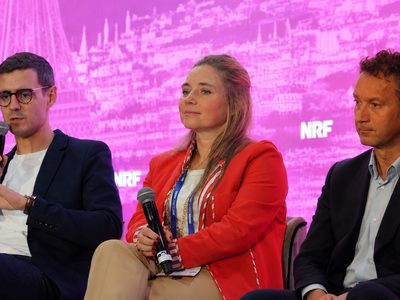
Delmas spoke alongside Asana VP of Revenue Marketing Lucy Barclay at NRF Europe in Paris. She described how Lagardère has been restructuring the machinery behind its international expansion. It has created a dedicated team for new-market openings, and is standardising processes and giving teams greater visibility over the dependencies that determine whether a store actually opens on time.
The technology matters. But one of the most useful lessons from Lagardère's experience came before the technology was implemented: you cannot digitise a process you have not properly defined.
Growth Outpaced the Model
Lagardère Travel Retail operates more than 4,800 stores and restaurants in more than 50 countries, spanning Travel Essentials, Duty Free & Fashion and Dining. It generated €6.13 billion in consolidated revenue in 2025 and €334 million in recurring EBIT.
That scale did not arrive gradually. Delmas told NRF Europe that the business has tripled in size and entered 40 new markets over the past decade.
Expansion created reach. It also created fragmentation.
Lagardère deliberately retains an entrepreneurial culture because local flexibility matters in travel retail. What works in a Paris airport cannot simply be copied to Cambodia or Latin America.
But Delmas acknowledged the other side of that model. Growth had not come with the same structuring of processes and tools. The result is a varied landscape of IT systems that the company is working to reduce, and a daily challenge for its teams.
Lagardère is now trying to converge on common processes, systems and tools without losing the agility that helped it expand. That tension between global structure and local relevance sits at the centre of the transformation.
Five Things Friday
Five useful signals from the people shaping global retail. Every Friday.
Why Travel Retail Is Different
Every international retailer faces local differences. Travel retail adds another layer.
Lagardère does not simply choose a city, lease a shop and start selling. It operates largely through concessions in airports, railway stations and other travel locations. Delmas described the business as effectively B2B2C. First, Lagardère must win tenders with airports, railway operators or other landlords. Only then does it face the conventional retail challenge of persuading consumers to enter the store and buy.
Those consumers are unusual too. A shopper on a high street has usually chosen to go shopping. A traveller in an airport is there to catch a flight, often stressed, short of time and unfamiliar with the location.
Lagardère therefore has to attract customers while operating within heavily regulated environments. It deals with security requirements, local laws and a wide array of partners. That raises operating costs and, as Delmas explained, leaves very little room for error.
No Two Openings Alike
International expansion would be easier if every opening followed the same template. Lagardère's experience suggests otherwise.
Delmas compared projects at opposite ends of the complexity spectrum.
One is a new convenience business in Albania, due to open at the end of the year, where Lagardère already has a team, local knowledge and a legal entity. The business had a year to prepare.
Amsterdam Schiphol was very different. In 2025, Lagardère became the majority partner in the joint venture operating the airport's duty-free business, which became operational on 1 May. Delmas told the NRF Europe audience that the transition meant taking over 25 duty-free shops from two different players. Lagardère had less than six months to bring together three companies, including their teams, headquarters, offices, warehouses and legal structures.
Then there is Cambodia, one of Lagardère's most recent openings. The group launched commercial operations at the new Techo International Airport in October 2025. It was the kind of market where Lagardère starts with no stores, no team and sometimes little knowledge of the country.
The underlying lesson is that no opening template can be copied unchanged from one country to another. Geography, regulation, business mix and the number of shops all vary. Most critically, so does the time available.
What can be standardised is not the opening itself. It is the way the opening is managed.
A Chain of Dependencies
A store opening may look like a physical retail project. Operationally, it is a chain of dependencies.
HR needs people, IT needs systems and legal needs entities and agreements. Commercial teams need products, store planning needs to deliver the physical space, and operations needs processes in place from day one. Many of those tasks cannot begin until something else has happened first.
Lagardère now uses a dedicated opening team as a project management office, coordinating those streams and managing the interdependencies between them.
The important part is not maintaining a long list of tasks. It is understanding the relationships between them. If construction slips, what happens to training? If an IT system is delayed, which operational process becomes impossible?
When opening windows are compressed, those dependencies become the project. Delmas singled out three requirements: timing, information and coordination.
That is where Lagardère's transformation became less about project management and more about execution architecture.
Life Before the Platform
Until two years ago, Lagardère did not have a dedicated team responsible for new-country openings. When a new market needed to launch, the company would look for someone available and interested in managing the project.
That made institutional learning difficult. One opening might succeed, but the knowledge it generated was hard to carry into the next.
The problem became urgent as expansion accelerated. Delmas said 2025 was a record year, with seven new countries opened.
She created a dedicated opening department with two objectives. The first was to increase the number of openings the organisation could absorb. The second was to relieve the pressure those projects were placing on existing teams.
The new team began by auditing how openings had previously been managed. What it found will sound familiar to many large organisations. Project management was scattered across people and tools, from Excel to PowerPoint, with no standard way of working. Cross-functional visibility was limited, dependencies were weakly managed and data was inconsistent.
Lagardère ran a tender and selected Asana as the project management platform for its opening programme.
But installing the software exposed something more fundamental.
Clean the Room First
One of Delmas's most interesting observations had little to do with Asana itself.
To configure the platform properly, Lagardère first had to define its processes. If the way of working is unclear outside the tool, she said, the tool will not work either.
That meant cleaning up the operating model before digitising it. Processes had to be challenged, projects needed clearer structures and tasks needed owners. In some cases, the team discovered that ownership had simply been unclear.
That reverses the way many organisations approach transformation. The temptation is to buy a platform and expect it to create structure. Lagardère found that the structure had to come first.
As Delmas put it, you first need to "clean your room".
The system then becomes the mechanism through which that structure can operate at scale.
Seeing the Bottleneck
Once work is structured, it becomes visible.
Lagardère can now give different levels of the organisation different views of the same programme. The global executive committee sees high-level dashboards, while project managers work in task-level detail.
That matters because complexity often hides accountability. When hundreds of activities are spread across departments, spreadsheets and inboxes, a delay can be obvious without its cause being obvious.
Delmas acknowledged that openings sometimes run late and that the root cause has been hard to pinpoint. She expects the platform to help identify the bottlenecks.
That creates the possibility of learning across openings. Instead of simply asking whether a project was late, the business can start asking why. It can look for the process that repeatedly causes delays, the approval that takes too long and the part of the opening process that needs redesigning.
Over time, project management data can become operational data. And that is potentially more valuable than the dashboard itself.
The same principle applies on the shop floor. Lagardère's frontline app, TeamUp, built with retail operations platform YOOBIC, pushes information such as training and merchandising plans to store teams and collects their feedback and alerts. Delmas said it is still being rolled out, but is already live in 26 countries with more than 8,000 users.
The €250 Million Question
Lagardère now sees an opportunity to take the same model beyond country openings. Individual teams are already using Asana for their own roadmaps. The platform is also starting to track the global executive committee's portfolio of strategic transformation projects.
The bigger opportunity is construction. Delmas said the company generally spends around €250 million a year in capital expenditure building and refitting stores. Those projects involve long cycles and many decision points. Yet Lagardère does not currently have a single tool tracking the process from initial business plan through construction to post-project review.
Lagardère is assessing whether Asana could provide that layer: managing decision workflows, monitoring budgets and building a database of experience across projects.
AI then becomes more interesting. Not because it can magically manage construction, but because a structured dataset can reveal patterns that individual teams would struggle to see. It can show where projects stall, where budgets move and which steps consistently require intervention. Delmas said she sees a role for Asana's AI in identifying where the building process can improve.
Without structured work data, those questions are difficult to answer at scale. With it, AI has something useful to analyse.
AI That Augments
Lagardère does not present itself as an AI-first retailer. Barclay described the company as a thoughtful adopter rather than an early mover, and Delmas agreed.
The company sees opportunities in bringing together data from its many systems and moving more quickly from information to action, particularly for senior management. It also sees scope to automate back-office processes such as master data, pricing and merchandising. And it sees a role for AI in creating assets for tenders, including 3D renderings, videos and visuals, as well as in-store menu boards.
But Delmas drew a clear line around the physical customer experience. She believes AI should augment store staff rather than replace them, and said staffless, automated stores are not working in travel retail today.
That view reflects the realities of the channel. Efficiency matters because customers are under time pressure, and Lagardère is introducing technology such as self-checkout where it can accelerate transactions. But Delmas said the post-pandemic environment has also reinforced demand for service, advice and personalised human interaction.
The AI opportunity is therefore not about fewer people. It is about better-equipped people, supported by automated daily briefings, augmented training and faster access to insight. They spend less time collecting information and more time serving travellers.
Fresh, Fast and Hybrid
The NRF Europe Q&A also revealed how Lagardère sees travel retail itself evolving.
One trend is hybridisation, with retail and food increasingly mixed in the same space. At Relay, Delmas said fresh, higher-quality food is booming. It is replacing the mass-produced sandwiches historically associated with travel convenience.
Customers want quality, but they still want speed. In duty free, there is strong appetite for new trends and brands, which makes time to market a critical differentiator.
That means the future travel store has to solve several problems at once. It needs fresh food, new brands, better service and faster transactions, all delivered to someone who may need to reach a departure gate in ten minutes.
That combination makes execution more important, not less.
Standardising on the Move
The transformation is happening while the business continues to expand.
Lagardère Travel Retail's revenue grew 5.5% as reported and 4.4% like for like in 2025, with the Amsterdam Schiphol duty-free operation accounting for the difference. Growth continued into 2026. First-half revenue rose 3.3% like for like despite what the group described as a difficult geopolitical and macroeconomic environment, while recurring EBIT reached a record €121 million.
The timing is significant: operational standardisation is easier when a company is standing still. Lagardère is attempting it while new concessions are won, markets open, stores are refitted and local requirements evolve.
The objective is not to eliminate complexity. At this scale, that would be unrealistic. The objective is to make complexity manageable.
Build Versus Run
Retail transformation is often discussed through what customers can see: a new concept, a redesigned shop, self-checkout or AI.
But Lagardère's experience points towards another source of competitive advantage: the operating system behind the store.
How quickly can a company turn a tender win into an operating business?
How quickly can teams identify a bottleneck?
Can one market learn from the opening that happened before it?
And can leadership see where intervention is required before a delay becomes a crisis?
Those questions become more important as retailers grow. Lagardère's lesson from 40 new markets is that entrepreneurialism can help create scale, but eventually scale needs structure. Not structure for its own sake, but structure that allows the organisation to keep moving quickly without relying on individuals to hold the complexity together.
Delmas's final recommendation at NRF Europe captured that idea. Retailers should start structuring processes, tools and IT systems early, because it is always easier than managing change later. She also argued for separating "build" from "run", because the emergencies of day-to-day operations will otherwise consume the attention and resources that transformation requires.
That may be the most transferable lesson from Lagardère's transformation.
Opening stores at scale is not simply about moving faster. It is about building an organisation that does not have to reinvent how it works every time it grows.
Sources
This article is based on a session at NRF 2026: Retail's Big Show Europe in Paris featuring Charlotte Delmas of Lagardère Travel Retail and Lucy Barclay of Asana. It also draws on Lagardère's full-year 2025 and first-half 2026 results and Lagardère Travel Retail announcements on Amsterdam Airport Schiphol and Techo International Airport.
Related coverage
Leadership
Retail Expansion: What JOE & THE JUICE and L'Osteria Won't Change
Sep 29, 2026
Leadership
Stanley 1913's Next Era: From Heritage Thermos to Global Hydration Powerhouse
Aug 20, 2026
Leadership
Arc'teryx CEO Stuart Haselden: How the Brand Grew 5x Without Betting on AI
Jun 18, 2026
Leadership
Zalando's Co-Founder Says Retail Is at an Inflection Point. Here Is What Comes Next.
Jun 1, 2026
Stanley 1913's Next Era: From Heritage Thermos to Global Hydration Powerhouse
Stanley 1913 Chief Brand Officer Kate Ridley on heritage, the Quencher effect, Post Malone and Messi partnerships, TikTok Shop and life beyond hydration.
Continue readingMore in Leadership
🔍 Explore related coverage
Sources and provenance
- Moodie Davitt Report (secondary)(opens in a new tab)
Moodie Davitt Report
- Lagardere Travel Retail homepage(opens in a new tab)
Lagardère Travel Retail