Retail Growth 2026: Why CEOs Are Fighting Harder Than Ever for Every Sale
Retail growth in 2026 is no longer about price. AlixPartners, Pepco Group, Ahold Delhaize and Direct Group leaders argue volume-led like-for-like growth, operational simplicity, AI-led tech debt reduction and disciplined M&A are the only credible path to durable performance.
- 1Volume-led like-for-like growth, not value growth, is the defining 2026 retail battleground
- 2Operational simplicity is now a competitive weapon as complexity punishes margin-thin retailers
- 3AI coding tools like Claude Code can compress legacy tech debt, but compute spend must be tracked
Retail CEOs are facing one of the toughest growth environments in decades. Consumers are spending less, operational costs continue to rise, and competition has never been more intense. For leaders across the globe, one question dominates every boardroom: how do you drive real, sustainable growth when shoppers are pulling back?
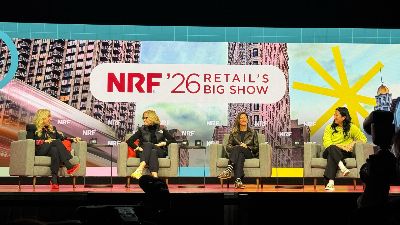
That was the central focus of a defining session at the World Retail Congress 2026 in Berlin, where some of the industry's most experienced executives gathered to confront the challenge head-on.
The session was led by Paul Martin, Global Retail Growth Leader and Managing Director at AlixPartners, alongside Stephan Borchert, Group CEO of Pepco Group, Neela Montgomery, Supervisory Board Member at Ahold Delhaize, and Bernie Brookes, Chairman of Direct Group.
Their conclusion was unambiguous. Retailers can no longer rely on price increases to fuel performance. The path to sustainable growth runs through operational excellence, sharper customer relevance, disciplined investment, and the ability to move faster than the competition.
Growth Is Up. So Why Are Retailers Worried?
The numbers look fine on the surface. Many retailers are reporting positive sales growth in 2026. The problem is that most of it is being driven by inflation, not by more customers buying more products.
Paul Martin opened the session with a warning that cut through the room. Value growth can be misleading. Volume growth, how much product is actually moving through a retailer's ecosystem, tells the real story.
Across most major economies, and particularly across Europe, retail sales volumes remain below or barely above pre-pandemic levels. For asset-heavy businesses built around moving product through warehouses, delivery fleets, and store networks, that creates enormous pressure on profitability.
Martin described volume-led like-for-like growth as the defining retail battleground on the road to 2030.
"Retailers have to drive volume growth," he said, pointing to stock turns, operational efficiency, and customer frequency as the metrics that truly matter.
One More Visit. One More Product. That Is the Whole Game.
No one on the panel understood the urgency of this challenge more personally than Stephan Borchert. When he joined Pepco Group, the business had already endured more than six consecutive quarters of negative like-for-like growth. Fixing that became his first and most pressing priority.
"We are looking back at a period of massive price inflation," Borchert said. "Customers are increasingly value-seeking, better informed, and highly selective."
In this environment, he argued, retailers are fighting for something deceptively simple: one more visit and one more product in the basket. Volume-led like-for-like growth, he believes, is the clearest and most honest signal that a retailer's value proposition is actually working.
Five Things Friday
Five useful signals from the people shaping global retail. Every Friday.
Neela Montgomery agreed, and added a harder edge to the point. Inflation does not just flatter the numbers. It actively hides the truth.
"Volume-led growth was always where there was nowhere to hide," she said. "You have to face the truth and understand the real state of your business."
Without granular visibility at category and subcategory level, she warned, retailers can convince themselves they are performing well when the underlying reality tells a very different story.
Bernie Brookes brought the point to life with a concrete example. A coffee company he chairs in Australia is currently reporting 10 percent value growth. Volumes, however, are down approximately 8 percent. The headline figure looks strong. The business is under serious pressure.
"It can cover a lot of evils," Brookes said. His broader message was equally direct: growing from the core is cheaper and more sustainable than chasing new customers. Retaining existing customers, and getting them to spend more, is the foundation of any credible retail growth strategy.
The Framework Retail Leaders Are Using to Unlock Growth
To give the discussion structure, Martin introduced the AlixPartners retail growth framework, a three-tier pyramid built around nine specific levers.
The base tier is about fixing the fundamentals: getting pricing, promotions, product assortment, inventory flow, and operational execution consistently right. The middle tier is about differentiation, creating strong enough reasons for customers to choose you over competitors in markets where overall demand is broadly flat. The top tier is about placing bold bets: acquisitions, adjacent revenue streams, new business models, and technology-led growth opportunities.
What makes today's environment so demanding is that retailers cannot work through these tiers one at a time. All three must be tackled simultaneously, with the same finite pool of capital and talent.
The Best Retailers Are Winning on the Basics
If there was a single theme that ran through the entire session, it was this: in a volatile market, operational simplicity is a competitive weapon.
Borchert was emphatic. Complexity is punishing retailers right now. At Pepco, the entire growth strategy has been built around ruthlessly simplifying operations and raising the standard of execution across every part of the business.
That means stronger product relevance, better quality perception, genuine price leadership, and hard discipline on store network decisions. Over-expansion has left many retailers carrying stores that are liabilities rather than assets.
"The stores are assets," Borchert said, "but equally they can become liabilities if like-for-like sales go down."
Brookes added that the biggest efficiency opportunities in most retail businesses are already there, waiting to be unlocked. They are buried in distribution centres, packaging decisions, replenishment timing, and store-level execution. Frontline employees, he noted, usually know exactly where the problems are. Senior leadership teams often do not.
The retailers that get this right, he argued, create a powerful positive loop: stronger sales enable better pricing, which attracts more customers, which funds greater investment in staff and service, which makes the business even more competitive.
The AI Wake-Up Call Retail Cannot Ignore
Technology debt has been a slow-burning crisis in retail for years. Artificial intelligence, the panel agreed, is now making it urgent to address and giving retailers new tools to do so faster than anyone expected.
Montgomery was the most forceful voice on this point. Just six months ago, she said, few retail leaders would have predicted how quickly AI coding tools could reshape their technology departments. That window is now open, and retailers need to be moving through it.
She specifically named Claude Code as the tool retail technology teams should have front of mind.
"If you don't have someone in your team waking up every day thinking, how is Claude Code going to eat my tech debt, that's an issue," she said. "I really do think that we are going to be able to do some amazing things with our existing code base."
But she was equally firm that AI transformation is not a cost-free exercise. Compute spending is real, it is growing, and most retail leadership teams are not tracking it with anywhere near enough discipline.
"How much are you spending on tokens, and do you even look at it?" she asked.
The broader panel agreed that strong data foundations remain the non-negotiable prerequisite for any of this to work. Without a clean, connected view of customer and operational data, even the most sophisticated AI strategy will fail to deliver.
Why Customers Choose You Over Everyone Else
In stagnant markets, differentiation stops being a strategic priority and starts being a survival requirement. But Borchert was clear that effective differentiation cannot be bolted on. It must be embedded in a brand's DNA, feel completely authentic, and evolve continuously as consumer behaviour shifts.
Pepco's recent loyalty app launch in Poland illustrates what this can look like in practice. Built around gamification and a simple rewards structure, the app was deliberately designed to shape customer behaviour without the economic complexity of a full e-commerce operation. Within 60 days of launch, it had attracted 1.5 million members, many of whom made their first purchase almost immediately.
But Borchert was quick to temper any suggestion that differentiation always means big, bold innovation.
"It is sometimes the basics that make the difference to customers nowadays," he said, pointing to something as simple as how a colleague greets a customer at the entrance or the quality of the checkout experience.
Brookes extended the discussion to the department store model, pointing to Selfridges as one of the few formats that has maintained genuine relevance by committing to a clear identity: a destination that offers an experience, not just a transaction. Many others, he argued, have lost their way by trying to be everything to everyone and ending up standing for nothing.
Montgomery brought a sharp piece of consumer data to bear on the differentiation question. In the United States, the top 10 percent of consumers now account for approximately 50 percent of total retail spending. She noted that early signs of this K-shaped divide are beginning to emerge in Europe as well. For retailers, understanding precisely which customer segment they are building for is no longer optional. It is the starting point for every strategic decision.
2% of Revenue. 30% of Profit. The Retail Media Reality.
The session also explored one of the most significant structural shifts reshaping retail business models: the rise of retail media and data monetisation as high-margin revenue streams.
Montgomery framed the opportunity starkly. She cited a major North American retailer where retail media contributes just 2 percent of total revenue but accounts for 30 percent of operating profit. The numbers illustrate why so many retailers are now looking at their customer data as a business asset in its own right.
But she was careful to manage expectations. Retail media at scale requires scale of first-party data first. For mid-sized retailers, building a competitive retail media platform is genuinely difficult. The more realistic and often more valuable opportunity for those businesses lies in building smarter data partnerships with suppliers, using shared customer insight to drive mutual growth rather than treating data purely as an incremental revenue line.
Buy a Business or Fix the One You Have?
Retail M&A is returning in 2026, but the logic driving deals has changed. Rather than expansion for its own sake, capital is flowing toward simplification, focus, and balance sheet repair.
Pepco's own story under Borchert is one of the clearest examples of this shift. After joining the business, he led the deliberate divestment of Poundland to sharpen focus entirely around the core Pepco brand. The outcome was striking: greater investor clarity and a near doubling of the company's stock price over twelve months.
Brookes argued that the majority of retail M&A failures come down to one thing: deals driven by ambition rather than honest capability assessment. Before any acquisition, he said, there is one question every leadership team must answer with honesty.
"What capability do we have?"
He pointed to Woolworths Australia as the benchmark for capability-led growth. Starting at around $5 billion in revenue in 1994 and reaching $42 billion today, Woolworths expanded by consistently following its genuine strengths. Fresh food expertise led to food service. Fast-moving merchandise capability built Australia's largest liquor retail business. Customer service strength created the country's largest pub operation.
The contrast with department stores is painful. Twenty-five years ago, their deep control of in-store beauty gave them every structural advantage needed to build what Sephora and Douglas became globally. They did not see it. The capability was there. The ambition to act on it was not.
There Is No Finish Line
As the session drew to a close, the panel turned to the broader reality facing retail leaders today. Tariffs, geopolitical instability, AI disruption, changing consumer behaviour, and relentless cost pressure are not challenges to be solved and set aside. They are the permanent conditions of the operating environment.
Montgomery's warning was pointed: the volume of short-term crises hitting retail right now makes it dangerously easy to lose sight of the longer-term shifts that will actually determine who wins. She singled out GLP-1 medications as a trend the industry is not yet taking seriously enough, one with the potential to reshape consumer spending across food, health, and wellness in ways that will catch unprepared retailers off guard.
Borchert delivered the line that best captured the mood of the entire session.
"Sequential is not an option anymore," he said.
Winning in retail in 2026 means fixing operations, modernising technology, building loyalty, simplifying complexity, and chasing growth, all at once, with the same team and the same resources. The businesses that get this right, Borchert added, will be the ones with leadership teams that are fully aligned, properly incentivised, and empowered to move without hesitation.
The winners will not be the biggest retailers, or even the cheapest. They will be the ones that move fastest, stay closest to their customers, and refuse to stop adapting in a market that will not slow down for anyone.
Frequently Asked Questions
What is the key point of "Retail Growth 2026: Why CEOs Are Fighting Harder Than Ever..."?
- Retail growth in 2026 is no longer about price. AlixPartners, Pepco Group, Ahold Delhaize and Direct Group leaders argue volume-led like-for-like growth, operational simplicity, AI-led tech debt reduction and disciplined M&A are the only credible path to durable performance.
Growth Is Up. So Why Are Retailers Worried?
- The numbers look fine on the surface. Many retailers are reporting positive sales growth in 2026. The problem is that most of it is being driven by inflation, not by more customers buying more products. Paul Martin opened the session with a warning that cut through the room. Value growth can be misleading.
One More Visit. One More Product. That Is the Whole Game - what does it mean?
- No one on the panel understood the urgency of this challenge more personally than Stephan Borchert. When he joined Pepco Group, the business had already endured more than six consecutive quarters of negative like-for-like growth. Fixing that became his first and most pressing priority.
The Framework Retail Leaders Are Using to Unlock Growth - what does it mean?
- To give the discussion structure, Martin introduced the AlixPartners retail growth framework, a three-tier pyramid built around nine specific levers. The base tier is about fixing the fundamentals: getting pricing, promotions, product assortment, inventory flow, and operational execution consistently right.
The Best Retailers Are Winning on the Basics - what does it mean?
- If there was a single theme that ran through the entire session, it was this: in a volatile market, operational simplicity is a competitive weapon. Borchert was emphatic. Complexity is punishing retailers right now.
Related coverage

Leadership
Stanley 1913's Next Era: From Heritage Thermos to Global Hydration Powerhouse
Aug 20, 2026Leadership
Arc'teryx CEO Stuart Haselden: How the Brand Grew 5x Without Betting on AI
Jun 18, 2026
Leadership
Zalando's Co-Founder Says Retail Is at an Inflection Point. Here Is What Comes Next.
Jun 1, 2026
Leadership