Your Next Customer Is an AI Agent. Is Your Content Ready?
AI agents are becoming a new audience for retail content. Amplience CTO John Williams argues that brands need strong SEO, structured data, semantic context and consistent content operations to earn inclusion in AI recommendations.
- 1Retail content must now communicate clearly with AI agents before it reaches shoppers.
- 2Structured data proves product attributes, while semantic content supplies the context behind a recommendation.
- 3The larger commercial opportunity lies in faster content operations, fewer returns and more full-price sales.
Paid partnership with Amplience
Retailers have spent a decade optimising for a search engine that returns a long list of links. John Williams, Co-CEO and CTO of Amplience, thinks that game is over. "With SEO you were optimising where you appear on a very long list," he told The Retail Podcast. "Now you're bidding to be included in a very short list. If you don't get it right, you're not even considered."
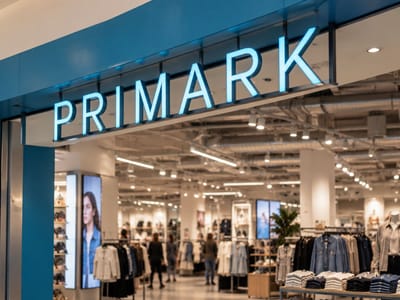
Williams runs the content platform behind John Lewis, Primark, Boots, Asda and Ulta Beauty. Ahead of Amplify, the company's event at Abbey Road Studios on 22 September, he set out what changes when the reader of your product page is an AI agent rather than a person.
What AEO and GEO actually mean
Answer engine optimisation (AEO) is the AI summary that now sits above Google's results. Generative engine optimisation (GEO) is the equivalent for ChatGPT, Claude, Perplexity and the rest. The two share a foundation. "You have to get your SEO strategy top notch to even play in that game," Williams said. "If your SEO isn't great, it doesn't matter what else you do on top."
Beyond that, both read the same two things: structured data and semantics. Data proves what a product is. Semantics supply the context. His example is a trail shoe. Attributes tell an AI the drop and the waterproof rating. They do not tell it whether this is the right shoe for a cross-country run in a wet forest in autumn. "That's where content starts to play its part."
The cost nobody owns
Amplience's new research set out to measure what generative AI saves in the content supply chain and ended up measuring the supply chain itself. Creation, it found, is about a third of the total cost. The rest is coordination, waiting for approvals, review, adaptation and localisation. Amplience's modelling puts the whole chain at about $14M a year for a mid-market retailer operating at scale, and $33M to $70M for a large-catalogue enterprise. Most organisations account for less than half of it.
The report's own framing is blunter: the returns bill alone was $890B in the US in 2024, and about a quarter of it traces back to inaccurate or insufficient product descriptions. Forrester finds 34% of UK and 26% of US online adults already used ChatGPT to search for products this year.
"No one owns that budget," Williams said. IT knows the cost of the CMS and the DAM. Marketing owns the agency. Someone else has bought an AI agent to write product descriptions. Each fix optimises the visible third and adds a seam between systems, so the people become the orchestration layer and the bottleneck moves rather than disappears.
Why it is a margin problem, not a cost problem
Speed to shelf decides how much of a product sells at full price. In fashion that window can be six weeks. "If it took you all that time to coordinate the content, you've already lost it." Inconsistent content also feeds returns.
Amplience's answer is to stop selling separate applications and consolidate them into a single content operations platform, built around how teams actually work, so the same content flows consistently to every channel. Consistency matters more than it used to. "Think of it as a signal that the AI is looking at," Williams said. "If your signals are all aligned, you've got a really good chance of punching a hole straight into the understanding of that AI. If they're out of sync, they dissipate and you won't be included."
The audience is the agent
The most striking shift is in who a campaign is for. "In this new world, your audience is actually the agent before it gets to the customer." Personalisation, once the prize, already happens inside the chat. What a brand controls is whether it gets recommended at all, which depends on the brand promise, the campaign and every piece of content that reinforces why you are the right place to buy.
Williams is careful about where people fit. "There's a difference between rules and judgement. If it's a rule, let AI do it. If it requires real judgement and expertise, bring a person into that process." That, he says, is what content operations turns out to be: systems, process and people, and you only understand the depth of it once you are in it.
The report, The Hidden Cost of Content in Commerce, is available from Amplience. Amplify: Agentic Commerce Live takes place at Abbey Road Studios on 22 September.
Listen to the full conversation on The Retail Podcast.
This feature is part of a paid partnership with Amplience.
Frequently Asked Questions
What is the key point of "Your Next Customer Is an AI Agent. Is Your Content Ready?"?
- AI agents are becoming a new audience for retail content. Amplience CTO John Williams argues that brands need strong SEO, structured data, semantic context and consistent content operations to earn inclusion in AI recommendations.
What AEO and GEO actually mean?
- Answer engine optimisation (AEO) is the AI summary that now sits above Google's results. Generative engine optimisation (GEO) is the equivalent for ChatGPT, Claude, Perplexity and the rest. The two share a foundation. "You have to get your SEO strategy top notch to even play in that game," Williams said.
The cost nobody owns - what does it mean?
- Amplience's new research set out to measure what generative AI saves in the content supply chain and ended up measuring the supply chain itself. Creation, it found, is about a third of the total cost. The rest is coordination, waiting for approvals, review, adaptation and localisation.
Why it is a margin problem, not a cost problem?
- Speed to shelf decides how much of a product sells at full price. In fashion that window can be six weeks. "If it took you all that time to coordinate the content, you've already lost it." Inconsistent content also feeds returns.
The audience is the agent - what does it mean?
- The most striking shift is in who a campaign is for. "In this new world, your audience is actually the agent before it gets to the customer." Personalisation, once the prize, already happens inside the chat.
Related coverage



Pinterest, Gap and the New Rules of Retail Discovery
At Shoptalk Spring 2026, Pinterest and Gap revealed how AI is reshaping where shopping starts, how decisions form and where brands need to show up next.
Continue readingMore in AI in Retail
🔍 Explore related coverage
Sources and provenance
- The Hidden Cost of Content in Commerce(opens in a new tab)
Primary source - Amplience
- Amplify: Agentic Commerce Live(opens in a new tab)
Primary source - Amplience