Debenhams CEO Dan Finley on Rewriting Department Store Economics
Debenhams will not return to the British high street. CEO Dan Finley is rebuilding the 248-year-old brand as a stock-lite digital marketplace of around 30,000 brands and partners, using AI for pricing, product content and discovery, and wants marketplace to become the organising model for the whole Group.
- 1Debenhams brand GMV grew 11.6% to £730 million in the year to February 2026, with adjusted EBITDA up 38.5% to £34.8 million.
- 2The marketplace model moves stock risk to around 30,000 brands and partners, who own and fulfil the products Debenhams lists.
- 3Finley said AI now makes pricing decisions line by line in minutes and expands five product attributes into 50.
For a retailer whose name was once synonymous with the British high street, Dan Finley is remarkably clear about one thing.
Debenhams is not coming back to it.
The stores, the long leases and much of the inventory risk are gone. The business Finley is building around one of the world's oldest retail names increasingly has more in common with a technology platform than with the department store generations of British shoppers remember.
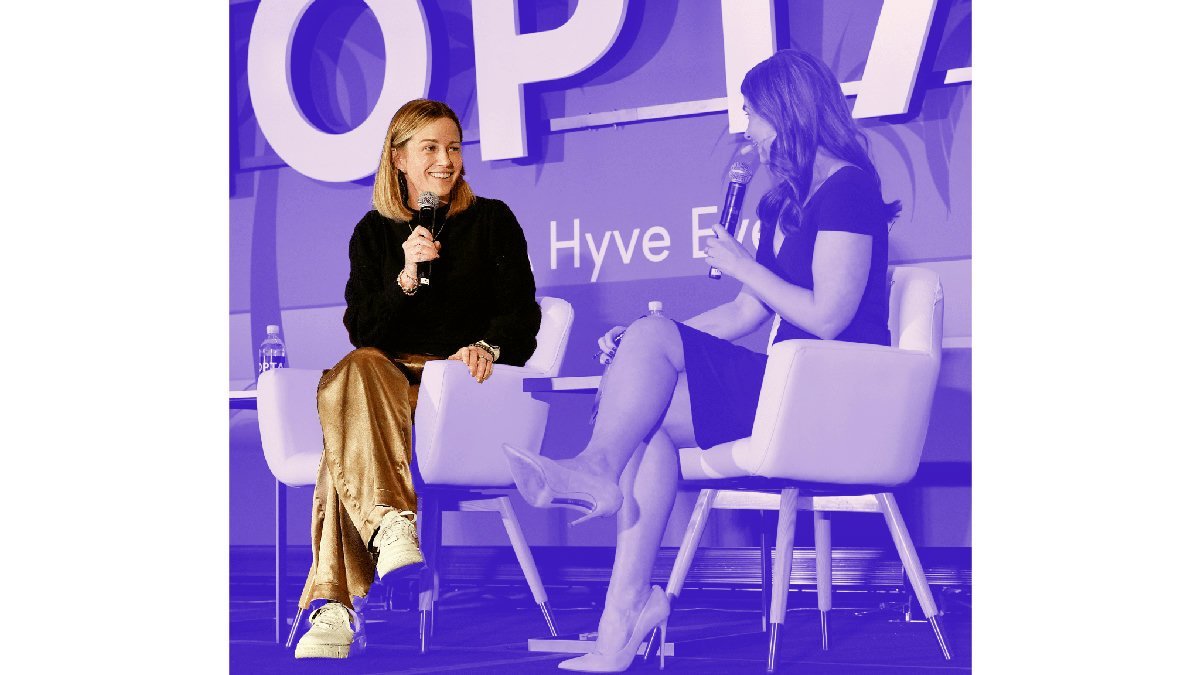
Speaking with Retail Week Senior Fashion Reporter Aoife Morgan at NRF Europe in Paris, the Debenhams Group CEO laid out the thinking behind one of British retail's more unusual transformations.
The ambition is not to recreate the old Debenhams online. It is to change the economics that ultimately made the old model unsustainable.
Finley's analogy is Spotify. He wants Debenhams to become the destination of choice across fashion, beauty and home, where customers know with certainty that they will find what they are looking for, delivered in a curated and personalised way.
"Nobody says too many songs on Spotify," he said.
That creates a fundamentally different department store. The old Debenhams was constrained by how many products could physically fit into a building. The new Debenhams is constrained by how effectively it can help customers navigate almost unlimited choice.
And that makes curation, personalisation and technology, rather than square footage, the new economics of the department store.
Brand Intact, Model Broken
Debenhams' collapse could easily be read as another story about consumers abandoning traditional department stores.
Finley sees it differently. Tens of millions of consumers loved shopping with Debenhams, he said, and millions were still doing so in the 12 months before it went into administration.
The problem was not consumer affection. It was the cost structure underneath it.
Five Things Friday
Five useful signals from the people shaping global retail. Every Friday.
Store-based retailing had become too expensive. Thirty-year leases and upward-only rent reviews were too burdensome, and business rates were too high.
Then there was the stock. Finley recalled that in December, before one Christmas had even happened, the business would already be ordering product for the next. That meant forecasting demand 13 months in advance, then paying for, manufacturing and moving stock through the supply chain with no certainty that customers would want it.
For Finley, that was the part of Debenhams that needed to disappear. Not the brand, but the economics.
Someone Else's Stock
The marketplace model changes that equation.
Instead of buying every product it sells, Debenhams lists the inventory of thousands of brands, retailers and consumer goods businesses. The partner owns the stock and fulfils the order. Debenhams connects that inventory with its customers and earns income on each sale, without having financed, warehoused or shipped the product.
That means the retailer can dramatically expand its range without funding every additional product itself.
Finley told the NRF Europe audience that Debenhams now has around 25,000 brands and partners in its ecosystem and is on course to reach £1 billion in GMV over the next few years.
Those figures are backed by the Group's most recent annual results. For the year to February 2026, the Debenhams brand grew GMV by 11.6% to £730 million, with adjusted EBITDA up 38.5% to £34.8 million. The marketplace passed 25,000 partner brands, up from around 15,000 a year earlier, with 5.7 million active customers. The Group said it has a clear line of sight to £1 billion in GMV and more than £50 million in EBITDA within three years.
Growth has continued since. In the six months to August 2026, Debenhams brand GMV rose 14.1%, and the Group said its ecosystem had grown to around 30,000 brands and partners.
The model does not remove retail risk. It changes where much of that risk sits.
The Spotify Test
What Debenhams is really trying to own is not the merchandise. It is the customer relationship, the discovery experience, the technology and the demand connecting customers with brands.
That helps explain the Spotify comparison. Spotify does not become less useful as its catalogue grows. Its value lies in helping each listener find the tiny fraction of that catalogue that is relevant to them.
Debenhams is attempting the same with products.
Finley illustrated the difference with dresses. The old Oxford Street store might have offered a shopper around 100 brands and 100 dresses to choose from, brilliantly merchandised. Online, Debenhams can offer 100,000.
The advantage is obvious. So is the problem. No customer wants to browse 100,000 dresses.
The model therefore depends on Debenhams making that range feel digestible for each shopper. Finley sees AI as the answer, through richer product information, better visualisation and an AI shopping assistant that can quickly narrow the range to what is relevant.
He was candid that the job is unfinished. "We're certainly not there yet, and it's very much a work in progress," he said.
That turns personalisation from a marketing feature into a core part of the operating model.
Beyond One Label
That thinking is now moving beyond Debenhams itself.
Debenhams Group, which began trading under that name in 2025, includes boohoo, boohooMAN, PrettyLittleThing and Karen Millen alongside the department store brand. The Group has described the Debenhams turnaround as the blueprint for the wider business.
Historically, a shopper visiting one of the Group's fashion brands would only find products designed and manufactured under that label. If they wanted a complementary item from another brand, Finley said, they would go back to Google or straight to that brand's website.
He believes more choice increases the chance that the customer buys with the Group instead. A shopper buying a dress might also want a handbag or high heels to go with it, so why not offer third-party brands such as Kurt Geiger alongside it?
PrettyLittleThing has already made that pivot, becoming a fashion-led marketplace selling complementary brands across fashion, home and beauty. Finley said the wider Group is now back in growth.
It is a significant strategic shift. A fashion brand traditionally asks how much of its own product it can sell to a customer. A marketplace asks how much of that customer's total demand it can satisfy.
Those are very different businesses.
Pricing at Product Level
A marketplace with tens of thousands of partners also creates an enormous operational challenge. Products need descriptions and structured attributes, prices and promotions need managing, and customers need support. The more the range expands, the harder those jobs become to do manually.
That is where Finley sees AI having its most immediate impact. He described Debenhams Group as AI-first, having replaced its technology over the past couple of years, with technology now at the centre of the turnaround.
Merchandising is one example. Finley described how, on Monday afternoons, hundreds of colleagues used to work through thousands of lines in Excel, product by product, deciding on price and promotional changes. The process took hours and usually ended in generalisations: take 15% off everything, or 10% off one group and 15% off another.
AI now allows the business to make individual pricing and margin decisions line by line, in minutes, improving margin as a result.
The strategic consequence is not simply labour efficiency. It is decision granularity. A machine can make thousands of small decisions economically where a human team would have to group them together.
Content at Scale
The same principle applies to product information.
A conventional retailer can manually enrich a relatively controlled range. A marketplace with 25,000 to 30,000 brands and partners cannot simply keep hiring, since that work would typically require armies of people.
Finley said Debenhams now uses AI to turn static images into video in seconds. It can also expand five product attributes and a short description into 50 attributes and a description of up to 2,500 words. The same technology puts a customer service assistant in the hands of every shopper, answering personalised questions instantly.
Again, the significance is scale. Without automation, a growing range can make the customer experience worse as product information becomes inconsistent. With reliable automation and the right quality controls, range and content depth can grow together.
That makes AI part of the economics of the marketplace rather than an experiment sitting beside it.
Finley described the moment as a game of snakes and ladders. Businesses at the top of the ladder can be overtaken quickly if they fail to embrace AI. Employees who master it in their own field have a once-in-a-generation opportunity to transform their careers.
Evolution, Not Revolution
Perhaps the most interesting part of Finley's AI argument was where he was sceptical.
Retail is currently fascinated by agentic commerce, and the dominant narrative suggests consumers will soon hand much of their shopping to AI agents. Finley believes some of that is exaggerated.
He expects the consumer experience to evolve rather than be overturned, pointing to AI overviews already appearing in Google search. He noted that the industry heard similar predictions of disintermediation with Instagram Shop, TikTok Shop and Google Shopping.
Change is already visible. Debenhams is seeing longer search terms, more expansive queries and customers wanting to compare and understand products in more depth. Finley said consumers' thirst for instant information has increased significantly.
He also expects AI platforms such as ChatGPT, Gemini and Claude to monetise these new discovery surfaces through advertising and paid search. For retailers, that makes them another channel to master and learn to use economically.
But Finley's core principle is not to predict which interface wins. It is to build the speed and agility to respond to whichever one does.
"It's really hard to think what's going to happen next week, never mind in three years," he said.
The Back-Office Revolution
Finley believes the genuinely revolutionary change is happening where customers cannot see it: in supply chains, merchandising, buying and technology departments.
That matters because it changes who can compete.
Large retailers have historically enjoyed an obvious advantage in headcount, buying teams, technology departments and capital. AI potentially compresses part of that advantage, allowing smaller teams to do work that once required far greater resources and funding.
Finley described this as an opportunity for "small and mighty" teams, start-ups and disruptive businesses to take the fight to much larger incumbents.
That could ultimately prove more consequential than whether consumers buy a dress through a chatbot. AI's biggest retail impact may not be changing what the customer sees. It may be changing how many people and how much capital a retailer needs behind the screen.
Marketplace as the Business
There is another important difference between Debenhams and retailers adding marketplaces to otherwise conventional models.
Asked about competition from retailers such as Next building their own marketplaces, Finley said Debenhams welcomes it. But he argued that for most competitors, marketplace accounts for somewhere between 1% and 10% of the business. Debenhams' aspiration is for it to reach around 95%.
That is an ambition rather than the current mix. Across the whole Group, marketplace reached a record 38.9% of GMV in the six months to August 2026, up from 32.7% a year earlier.
But it reveals the strategy. For many retailers, marketplace is a range extension. For Debenhams, it is becoming the organising principle, shaping culture, go-to-market strategy, partner relationships, capital allocation and the skills the company needs.
A Turnaround, Not a Finish Line
There is genuine progress behind Finley's confidence, but Debenhams Group remains a turnaround rather than a finished transformation.
In the year to February 2026, Group adjusted EBITDA rose 34.6% to £53.3 million, and every brand was profitable on that basis. But the adjusted loss after tax widened to £33.1 million, and Group GMV before returns fell 21.6% as the business prioritised profitable sales.
Momentum has continued. In the six months to August 2026, Group GMV returned to growth, rising 1.8%, while adjusted EBITDA increased 13.9% to £24 million. PrettyLittleThing, boohoo and Karen Millen all returned to growth alongside the Debenhams brand.
The improvement has also involved aggressive restructuring. In the year to February 2025 alone, the Group made £50 million of annualised headcount savings and cut stock holdings and capital expenditure by more than half. In September, it agreed the £90 million sale of its Sheffield distribution centre assets to Primark, handing fulfilment to a third-party logistics provider.
That deal underpinned the announcement Finley referred to on stage. Net debt stood at £102 million at the end of August, but the Group now expects it to be negligible by its February 2027 year end. Finley acknowledged there is still plenty of work to do.
No Way Back to the High Street
What happens, then, to one of Britain's best-known department store names?
For the UK, Finley's answer leaves little ambiguity. He sees Debenhams as "Britain's online department store". The business may explore franchising or licensing overseas, but he does not see it returning to the British high street.
That makes the Debenhams experiment particularly interesting. Most omnichannel retailers are working out how stores and digital should complement one another. Debenhams is testing a different proposition: what happens when the department store survives but the building does not?
The answer requires the digital business to recreate what physical department stores did particularly well: discovery, browsing, inspiration, curation, trust and cross-category shopping. But it can attempt to do so without many of the structural costs that came with the building.
The Algorithmic Department Store
That ultimately makes Debenhams' transformation about more than e-commerce.
The old department store solved the problem of choice physically. Buyers selected the range, merchandisers decided what sat next to what, and floor space imposed a natural limit. Staff helped customers find their way.
The marketplace removes many of those constraints. But removing the constraint creates another problem: too much choice can be almost as useless as too little.
Debenhams therefore needs technology to do digitally what the department store once did physically, turning abundance into relevance. AI can narrow 100,000 dresses to the handful that suit one shopper. Marketplace infrastructure can bring thousands of brands into one destination without Debenhams financing the stock. And a digital platform can serve millions of customers without reopening the expensive estate that contributed to the original model's collapse.
That does not guarantee success. Competition for online attention is intense, marketplaces depend on maintaining quality as the range expands, and the wider Group transformation remains unfinished.
But Finley's strategy is increasingly coherent. He is not trying to rebuild the Debenhams people remember. He is trying to preserve what was valuable about it while removing what made the economics so difficult.
The brand, the breadth of choice and the department store idea stay. The stock, warehouses, leases and physical estate do not.
Finley believes that model can build Debenhams "back to be bigger and better than it ever was before, but online".
Debenhams is betting that the future of the department store is not another department store. It is a platform capable of making almost unlimited choice feel personal.
Sources
This article is based on RetailNews.ai's own reporting from Dan Finley's session with Retail Week's Aoife Morgan at NRF Europe in Paris. Financial figures were checked against Debenhams Group's audited results for the year ended 28 February 2026 (published 16 June 2026), its trading update for the six months ended 31 August 2026 (17 September 2026), its announcement of the £90 million Sheffield distribution centre disposal (10 September 2026) and its audited results for the year ended 28 February 2025 (26 August 2025).
Frequently Asked Questions
What is the key point of "Debenhams CEO Dan Finley on Rewriting Department Store..."?
- Debenhams will not return to the British high street. CEO Dan Finley is rebuilding the 248-year-old brand as a stock-lite digital marketplace of around 30,000 brands and partners, using AI for pricing, product content and discovery, and wants marketplace to become the organising model for the whole Group.
Brand Intact, Model Broken - what does it mean?
- Debenhams' collapse could easily be read as another story about consumers abandoning traditional department stores. Finley sees it differently. Tens of millions of consumers loved shopping with Debenhams, he said, and millions were still doing so in the 12 months before it went into administration.
Someone Else's Stock - what does it mean?
- The marketplace model changes that equation. Instead of buying every product it sells, Debenhams lists the inventory of thousands of brands, retailers and consumer goods businesses. The partner owns the stock and fulfils the order.
The Spotify Test - what does it mean?
- What Debenhams is really trying to own is not the merchandise. It is the customer relationship, the discovery experience, the technology and the demand connecting customers with brands. That helps explain the Spotify comparison. Spotify does not become less useful as its catalogue grows.
Beyond One Label - what does it mean?
- That thinking is now moving beyond Debenhams itself. Debenhams Group, which began trading under that name in 2025, includes boohoo, boohooMAN, PrettyLittleThing and Karen Millen alongside the department store brand. The Group has described the Debenhams turnaround as the blueprint for the wider business.
Related coverage

Department Store
John Lewis Is Turning Its Christmas Storytelling Machine Into an Always-On Content Studio
Sep 10, 2026Department Store
Ingka Centres: "We Are a Meeting Place, Not a Shopping Centre"
Jul 15, 2026
Department Store
Why 5 Million People Still Visit SM Supermalls Every Day Despite the Rise of E-commerce
Jul 8, 2026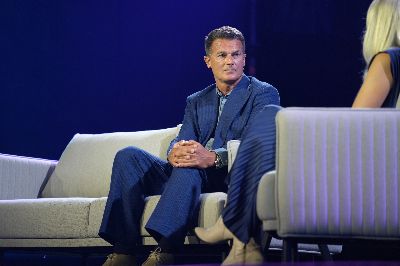
Department Store