Żabka Built the Retail System AI Needs Before AI Arrived
Żabka spent a decade modernising stores, building data infrastructure and equipping franchisees before generative AI arrived, and incoming CEO Tomasz Blicharski says that sequence is why AI now works across its 13,000-plus stores.
- 1Żabka began its transformation by asking what customers needed from convenience, remodelling around 4,000 stores before it digitised them.
- 2Data infrastructure came first: central data teams and data lakes now support models for pricing, assortment, store location and transport.
- 3Every Żabka store is franchised, so tools such as automated replenishment, planogram compliance and AI agents are built for franchisees.
Retailers have spent the past three years talking about artificial intelligence.
Żabka Group has spent roughly a decade building the infrastructure underneath it.
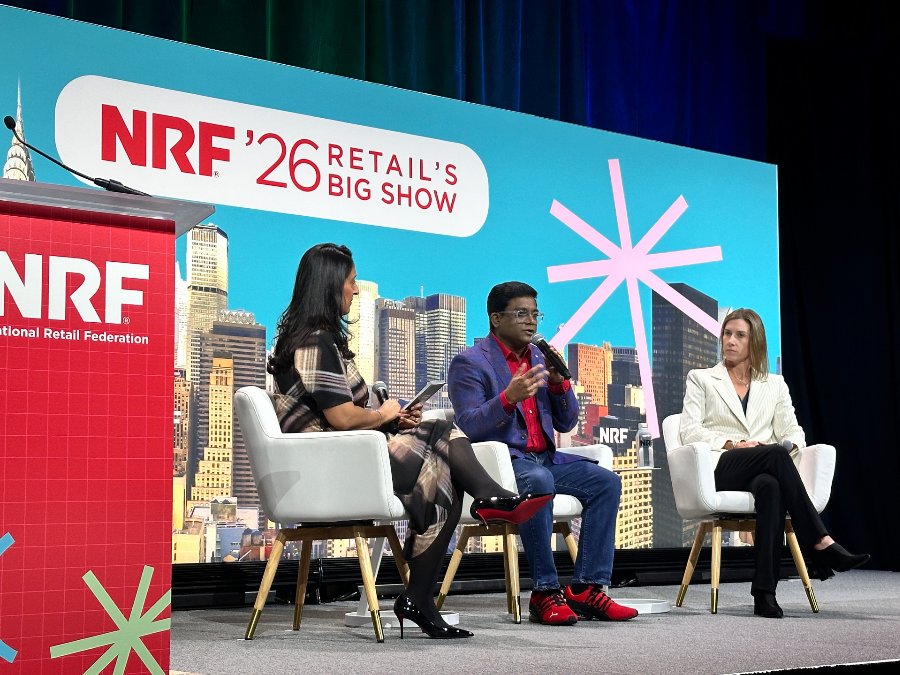
Today, the Polish convenience group uses data and AI across assortment, pricing, store location, logistics, replenishment, customer personalisation and franchisee operations. But Tomasz Blicharski, Żabka Group's Chief Strategy & Development Officer and its CEO from 1 January 2027, told NRF Europe in Paris that the transformation did not begin with an AI strategy.
It began with a much simpler question: what does the customer need from a convenience store now that they did not need before?
Answering it ultimately changed almost everything, from the stores, food and technology to the data infrastructure and the franchisee model. Eventually it changed the definition of Żabka itself, from a chain of small Polish shops into what the company describes as an "ultimate convenience ecosystem".
Speaking with Nir Manor, CEO of Transformational Retail Group, Blicharski traced that journey from a business opening roughly 200 stores a year to one that opened around 1,400 in 2025 alone.
The scale is impressive. The more interesting question is how Żabka built an operating model capable of absorbing it.
Before the Algorithms
Go back 15 years and Blicharski, who has spent 16 years at the company, describes a very different Żabka.
The stores were traditional convenience shops, with little fresh food and a heavier reliance on tobacco, alcohol and beer. Technology was treated as a cost function, and the priority was keeping costs as low as possible. The business was growing, but at nowhere near its current pace.
Then the customer began changing.
Żabka identified several structural shifts in Polish society. People were working some of the longest hours in Europe and starting families later in life. There were more single-person households and more young people in work, many with neither the time nor the inclination to cook at home.
Convenience therefore needed to mean more than proximity. It increasingly meant solving a meal.
Five Things Friday
Five useful signals from the people shaping global retail. Every Friday.
Żabka responded by pushing deeper into ready meals, sandwiches, coffee, hot dogs, pizza and other food-to-go categories. But management realised that new products could not succeed in the old store environment, with its dated logo, red and yellow colours and poor lighting.
So Żabka redesigned the brand and remodelled around 4,000 stores.
The result was more than a cosmetic refresh. It changed who came through the door.
Under 35
Blicharski said around half of Żabka's customers are now under 35, despite that age group representing only around a quarter of Poland's population.
That younger customer base became the trigger for the company's next transformation: digital.
But again, Żabka did not start with a flashy consumer-facing product. It started behind the scenes.
The company recognised that it was generating enormous quantities of data but not using them effectively. So it changed the organisation, recruiting technology talent and building models and software around everyday retail decisions. Those included which products should go into which store, what they should cost and where the next store should open.
These sound like incremental improvements. Across thousands of stores, they become an operating system.
Small Stores, Big Decisions
A typical Żabka store is only around 70 square metres, according to Blicharski. Yet that small footprint serves multiple customer missions: hot food and coffee, around 20 financial and non-financial services, beverages, and convenience and grocery ranges.
Different locations also behave differently. A residential store does not serve the same mission as one in an office district or a high-traffic travel location, and Żabka even runs seasonal stores on Polish beaches.
Standardisation alone therefore cannot optimise the network. Żabka needs consistency at scale while still making local decisions.
Technology provides part of the answer. Blicharski said the Group now uses automated planograms, so every store has its own detailed, software-generated layout, right down to shelf position.
In effect, the network can behave as one brand without every shop behaving identically.
The value of retail AI is often framed around replacing a human decision. Żabka's model shows another possibility: making a level of decision-making economically feasible that humans could never perform manually across 13,000 locations.
Earning Trust
Żabka did not know its modern convenience strategy would work when it began.
It tested the format on ten stores, then 50, then several hundred. Some assumptions proved wrong. Some existing customers could no longer find the products they had previously bought, so formats were adjusted and assortments differentiated by location.
That process mattered internally too.
Technology investment requires capital before its benefits are fully proven, and it needed the conviction of both shareholders and staff. Blicharski said Żabka deliberately started with relatively simple use cases. These showed employees that technology was there to help them achieve their goals rather than replace them.
The results, including faster expansion and higher gross margins, created permission to do more.
The transformation then became what Blicharski called a machine.
Żabka needed to remodel around 4,000 stores without running two different brands and store types side by side for too long. The first trials took three weeks per store, which Blicharski said was commercially impossible: close stores for that long and you go bankrupt.
Through trial and error, the company cut refurbishment closures to between five and seven days. It built the capacity to remodel more than 1,500 stores a year, sustaining the programme for two and a half years while still running the business.
Technology helped. But execution made the transformation real.
Industrial-Scale Expansion
The same operating discipline can be seen in the Group's expansion.
Żabka opened 1,394 stores in 2025, taking the Group network to 12,339 locations at year end.
Expansion accelerated further in 2026. The Group opened 435 stores across Poland and Romania in the first quarter alone, almost five a day on average. By the end of July, it reported 13,159 stores across the two countries and 12.4 million digital users across its apps.
And Żabka is not close to finished. Blicharski said the Group is on its way to close to 20,000 stores in Poland alone.
That pace would be difficult to sustain if every site decision depended on manual analysis. Blicharski said Żabka's location models help it avoid mistakes and shorten the time needed to find viable new sites.
This is AI as expansion infrastructure: a system influencing where capital gets deployed.
The Franchisee as Tech User
There is another reason technology matters disproportionately at Żabka. All of its stores are franchised.
That means the Group's digital transformation cannot stop at headquarters. It has to reach the people running thousands of individual locations, and it has to help them cope with rising labour costs, which Blicharski described as a key pressure in Poland and globally.
Blicharski said franchisees now have what they need on their phones, including automated replenishment and planogram compliance tools. More recently, Żabka has added AI agents to help them manage their stores.
A franchise network creates decentralisation. Technology can create coordination without removing local entrepreneurship. Headquarters does not need to make every decision. It can instead give thousands of operators better tools with which to make and execute them.
Data First, AI Second
When Manor finally raised AI, more than 20 minutes into the conversation, Blicharski's response was revealing.
Żabka had been using forms of AI before the term became fashionable, back when it was called big data or simply the use of data.
The Group created central data teams and built data lakes that made data fast and relatively cheap to use. On top of that, it developed models for pricing, assortment, store locations and transport. It then embedded models into the Żappka app, using personalised offers and promotions to increase customer lifetime value.
Only later came the current generation of LLMs and agentic AI, deployed as tools for employees and, above all, for franchisees.
That sequence may be one of the most important lessons in the Żabka story. AI did not create the transformation. The transformation created an organisation in which AI could be useful.
The technology is advanced. The foundations are not glamorous: structured data, clean infrastructure, defined use cases and people willing to use the tools.
Beyond the Store
The same philosophy explains why Żabka has expanded into businesses that do not look like conventional convenience retail.
The Group has built or acquired digital food businesses, including rapid delivery, meal subscriptions and a meals marketplace, alongside unmanned AI-powered stores and its consumer app.
But Blicharski emphasised that these businesses need to benefit from the infrastructure the core network has already built. He used rapid delivery as an example.
Żabka entered the category five or six years ago, while competitors were spending what he called obscene amounts of money chasing growth. Its priority was different. A business that lost money indefinitely did not fit the company's way of thinking.
Żabka therefore looked for synergies. Goods for its delivery service are procured and moved through the Group's own warehouses, cross-docking terminals and transport network. The delivery app also draws customers from the existing Żappka base.
But operations needed independence. After testing, Żabka chose dedicated dark stores rather than picking orders from its shops. Only that approach could deliver the 99.9% service level needed to win customer trust. The missions also differ: a delivery basket typically holds 20 to 30 items, while a Żabka store basket averages around five.
That balance matters. Integrate too much and the new business is smothered by the mothership. Separate everything and it loses the economic advantages of belonging to the Group.
Żabka's answer has been to share infrastructure where it creates an advantage while keeping operations separate where speed and execution require it.
Does It Travel?
The next question is whether Żabka's operating system can work outside Poland. Romania is the first major test.
The Group entered the country two years ago under the Froo brand rather than exporting the Żabka name, which Blicharski joked is probably too difficult to pronounce outside Poland. It acquired Romanian distributor DRIM Daniel Distribuție in 2024, giving it local logistics infrastructure before accelerating the store rollout.
Romania is not a copy-and-paste exercise. Products and formats are being adapted to local habits, even though the core format remains similar.
Blicharski put the Froo network at roughly 300 stores. He said Froo is currently opening around 200 stores a year and is accelerating towards around 300.
That makes Romania more than geographic expansion. It is a test of whether Żabka has built transferable capabilities rather than simply a successful Polish format. If its data, logistics, franchise and food-to-go systems can be adapted to another market, the value of the model changes considerably.
Then Came Couche-Tard
That question has become more consequential since July.
Alimentation Couche-Tard, the Canadian owner of Circle K, announced an agreement to acquire a controlling stake in Żabka Group and launched a voluntary tender offer for all its shares. The offer values Żabka at approximately PLN 32.62 billion, or about US$8.6 billion, and would be the largest acquisition in Couche-Tard's history. Shareholders and key executives holding approximately 57% of Żabka's shares agreed to tender their holdings.
At NRF Europe, Blicharski was understandably cautious. Żabka is a listed company and the tender process was under way, limiting what he could discuss.
But he did set out the strategic complementarity. Couche-Tard is a global convenience leader, operating mainly in North America but also across Europe, largely through forecourt and petrol station formats. Żabka has developed a high-street convenience model that works in Poland and appears to be working in Romania.
Crucially, it did so in one of Europe's toughest grocery markets. Blicharski noted that discounters hold a larger share of Polish retail than they do in Germany, approaching 50%. Competing in that environment forced Żabka to build capabilities in commercial technology, supply chain and consumer apps, which he believes are attractive to any retailer.
Completion remains subject to the tender process and regulatory approvals. How the deal ultimately reshapes either company remains to be seen.
The People Question
For all the discussion of data and automation, Blicharski ended somewhere surprisingly human.
He said people were the absolute key behind everything Żabka had achieved. That means not just employees at headquarters, but also franchisees and their staff, who are in direct contact with close to 5 million customers a day.
Żabka measures engagement with Gallup and, according to Blicharski, ranks among the most engaged retailers in the world. The only company scoring higher, he noted, is Couche-Tard. As incoming CEO, he wants to maintain and improve that engagement to retain and motivate talent across the network.
That matters because the next wave of AI may be more disruptive internally than the last.
Żabka's earlier technology investments automated specific decisions, such as location selection, replenishment, planograms, pricing, transport and personalisation. Generative and agentic AI can reach much further into knowledge work. Blicharski said the way white-collar employees work will change quickly over the next few years, describing a revolution that has already started.
For an incoming CEO, that creates a different leadership problem. The question is no longer simply which AI tools to deploy. It is how to redesign work around them without losing the people, expertise and entrepreneurial energy that built the business in the first place.
Compounding Advantage
It is tempting to look at Żabka today and focus on the visible numbers.
Manor noted that Żabka sells more pizza in Poland than Domino's and every other competitor combined, sold 85 million hot dogs last year and handles around 4 million transactions a day. Add more than 13,000 stores, more than 12 million digital users and a multibillion-dollar takeover, and the headline figures are hard to ignore.
But the NRF Europe conversation suggests the more important story is what happened between those numbers.
Żabka modernised its stores before it digitised them. It built data infrastructure before today's AI boom and used simple projects to earn internal trust before attempting more sophisticated ones. It turned individual store decisions into software, connected franchisees to the operating system and built logistics that could support businesses beyond the shop.
That is why the company's AI story is more interesting than another retailer announcing a chatbot.
The competitive advantage is not any single algorithm. It is a decade of operational decisions that increasingly feed one another.
Better data improves assortment. Better assortment drives transactions. More transactions create more data. And each layer gives the next one more information to work with.
Żabka's lesson from a decade of transformation is that retailers do not become AI businesses by adding AI. They become AI businesses by first building an organisation capable of turning data into thousands of better decisions every day.
Sources
This article is based on RetailNews.ai's reporting from Tomasz Blicharski's conversation with Nir Manor at NRF Europe in Paris. Store counts, openings and the leadership succession were checked against Żabka Group's FY 2025 results, Q1 2026 results, investor pages and its 5 May 2026 CEO succession announcement. Details of the takeover offer were checked against Alimentation Couche-Tard's 31 July 2026 announcement.
Frequently Asked Questions
What is the key point of "Żabka Built the Retail System AI Needs Before AI Arrived"?
- Żabka spent a decade modernising stores, building data infrastructure and equipping franchisees before generative AI arrived, and incoming CEO Tomasz Blicharski says that sequence is why AI now works across its 13,000-plus stores.
Before the Algorithms - what does it mean?
- Go back 15 years and Blicharski, who has spent 16 years at the company, describes a very different Żabka. The stores were traditional convenience shops, with little fresh food and a heavier reliance on tobacco, alcohol and beer.
Under 35 - what does it mean?
- Blicharski said around half of Żabka's customers are now under 35, despite that age group representing only around a quarter of Poland's population. That younger customer base became the trigger for the company's next transformation: digital. But again, Żabka did not start with a flashy consumer-facing product.
Small Stores, Big Decisions - what does it mean?
- A typical Żabka store is only around 70 square metres, according to Blicharski. Yet that small footprint serves multiple customer missions: hot food and coffee, around 20 financial and non-financial services, beverages, and convenience and grocery ranges. Different locations also behave differently.
Earning Trust - what does it mean?
- Żabka did not know its modern convenience strategy would work when it began. It tested the format on ten stores, then 50, then several hundred. Some assumptions proved wrong.
Related coverage

Grocery
Continente Sees Shopping Missions, Not Online and Offline
Oct 6, 2026Grocery
Groceryshop 2026: Value, GLP-1s and the New Grocery Shopper
Sep 27, 2026Grocery
Groceryshop 2026: AI Agents Are Now Building the Grocery Basket
Sep 25, 2026Grocery
M&S Food Put Its Entire Range on Machine Learning
Sep 24, 2026
Groceryshop 2026: Value, GLP-1s and the New Grocery Shopper
Groceryshop 2026 showed value being redefined by stretched budgets and GLP-1 medications, with NielsenIQ, Sam's Club and Chobani mapping the new grocery shopper.
Continue readingMore in Grocery
🔍 Explore related coverage
Sources and provenance
- Alimentation Couche-Tard release 31 Jul 2026(opens in a new tab)
Alimentation Couche-Tard