Continente Sees Shopping Missions, Not Online and Offline
At NRF Europe in Paris, Continente's Guilherme Cardoso explained how Portugal's grocery leader serves three shopping missions through one store-based workflow, prices quick commerce for speed, uses picking data to fix stockouts and is preparing to let customers shop through AI agents.
- 1Continente separates digital demand into three missions, stock-up, one-off and pop-up, and runs a different operating model behind each.
- 2A single Instaleap workflow lets store staff pick orders from every aggregator and Continente's own app without changing anything in store.
- 3Picking data shows exactly when a product is missing from the shelf, and stores that acted on it significantly improved their quality of service.
The future of grocery may not be about choosing between stores and e-commerce. It may be about making that distinction increasingly irrelevant to the customer.
Portugal's Continente has had plenty of time to arrive at that conclusion. The retailer launched online grocery in 2001, long before app-based delivery, quick commerce or AI shopping assistants became part of the industry vocabulary.
Today, its challenge is considerably more complicated. Customers may want a weekly shop delivered later in the week, or realise at 6pm that they need something within the hour. They may buy furniture or toys online, or walk into a store with the loyalty app open on their phone. And increasingly, they expect the retailer to understand that all of those interactions belong to the same person.
At NRF Europe in Paris, Guilherme Cardoso, Head of E-commerce at Continente, the food retail banner of Sonae's MC, joined Instacart Chief Commercial Officer Ryan Hamburger to discuss what happens when grocery stops treating digital and physical retail as separate businesses.
Cardoso's answer was less about creating one universal shopping journey and more about building an operating model capable of supporting several.
The customer does not have an online mission and an offline mission. They have a shopping mission. The retailer's job is to work out the best way to serve it.
Twenty-Five Years Online
That long history gives Continente an unusually deep perspective on how digital grocery behaviour has changed.
The basic principle, however, has remained stable. Cardoso said Continente's e-commerce proposition is designed to reflect the wider Continente brand: the same prices, the same promotions, the same loyalty programme and a wide range.
But the economics still have to work. Cardoso described e-commerce decision-making through a triangle of growth, profitability and customer experience.
Retailers often treat those three as mutually exclusive. Grow faster and profitability suffers. Protect margin and the customer experience deteriorates.
Cardoso said Continente has found a balance in recent years, growing significantly while improving both customer satisfaction and profitability. That triangle runs through almost every part of its digital strategy.
Three Missions
One of Cardoso's most useful distinctions is between the different reasons people shop.
Five Things Friday
Five useful signals from the people shaping global retail. Every Friday.
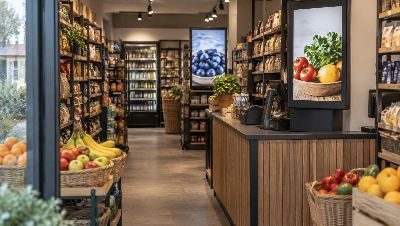
Continente broadly sees three digital missions. The first is the traditional stock-up: a large basket planned around the weekly shop. The second is the one-off purchase, particularly in categories such as toys, furniture and home products. The third is what Cardoso calls the pop-up mission, when something is needed now.
Continente has been working with quick-commerce aggregators since around 2018. Before that, Cardoso said, pressure for more same-day deliveries had been building as customers increasingly needed things later the same day.
When the retailer began working with aggregators, it realised the proposition worked better if it separated the shopping missions and the operating models behind them.
Today, a customer who needs something within the hour can order through Uber Eats, Glovo or Continente's own delivery app. One who needs groceries by 10pm can order on the website that morning. And a customer planning ahead can place a larger order for the coming days.
The main shift, Cardoso said, is how quickly people expect to receive their orders, and the quality they expect when they arrive. That sounds simple from the customer's side. Operationally, it is anything but.
One Workflow, Many Channels
Adding another digital channel is easy to understand on a strategy slide. Inside the store, somebody has to pick the order.
Continente's quick-commerce orders, delivered in under an hour, are picked entirely by store staff. Cardoso said earlier market experiments with 15-minute delivery were expensive and, in his view, unsustainable in Europe.
As Continente added aggregators, store staff initially had to juggle separate devices for different platforms. Cardoso described it, politely, as a messy experience. The customer gained convenience. The employee inherited complexity.
In 2019, Continente began working with Instaleap, the fulfilment technology provider now owned by Instacart, to build a single pipeline for orders. Over time, the system has absorbed the specific requirements of each aggregator.
The result is that Continente can add a new delivery partner, or launch its own app, without having to change anything in its stores. The orders simply arrive through the same workflow, with only a small code distinguishing them.
That changes the economics of adding channels. A retailer can expand distribution without proportionately expanding operational complexity at store level.
Paying for Speed
The same technology gave Continente another lever: pricing.
Cardoso said the retailer can charge different prices on quick-commerce platforms than in its stores. Customers accept that because they are paying for added value in the form of speed and convenience.
The premium allows Continente to pay aggregator commissions while protecting profitability, so the model works for the platforms as well as for the retailer.
The significance is broader than quick commerce. Retailers spent years pursuing channel consistency as though every price and process needed to be identical everywhere.
Continente's approach is more nuanced. The brand proposition stays consistent. The economics of serving different shopping missions do not have to. A customer asking for a product within an hour is creating a different cost structure from one planning a delivery days in advance, and the price can reflect that.
The Store's Limits
Continente's approach to fulfilment is similarly pragmatic.
It does operate dark stores. But Cardoso said that, given its store footprint, it generally makes more sense to use the assets it already has. The stores, the inventory and the people are already there, while a separate fulfilment network would add capital and operating costs.
Using stores for e-commerce creates its own tension, however. Sonae is mostly a brick-and-mortar retailer, and Cardoso admitted that in some stores, e-commerce is still seen as something of a "weird organism". Each store is its own ecosystem, and online has to fit in without disturbing it.
Continente therefore sets thresholds for individual locations. A store might have capacity for 100 or 200 digital orders a day, depending on how the physical store itself is trading. As a store approaches its limit, Continente looks across the network and redistributes orders to another location.
This is where omnichannel becomes an optimisation problem. The objective is not to maximise e-commerce orders from every store. It is to maximise the value of the whole network without allowing one channel to degrade another.
Picking as a Sensor
Something interesting happens when stores fulfil digital orders. They start generating new information about the physical shop.
Cardoso noted that raising stockouts with a store director is like telling a friend that his bathroom was dirty. It is not a conversation that ends well.
But picking data changes that conversation. Continente can now see, for example, that a particular brand of white rice will not be on the shelf in store 24 at 3pm on a Tuesday. The product may be in the stockroom. But for the online customer, and for anyone shopping in the aisle, it is unavailable.
Historically, Continente measured availability by checking promotional leaflets against shelves, often using mystery shoppers. Picking data provides a far more detailed and continuous view.
Cardoso said stores that acted on this data significantly improved their quality of service. That then created a flywheel: once one store became the best, the second-best store wanted to overtake it.
E-commerce, in other words, becomes a sensor for the physical store. Rather than simply consuming store resources, the data generated by digital orders exposes operational weaknesses that affect every shopper.
Culture Before Cameras
The NRF Europe session was framed partly around smart trolleys, cameras and sensors capable of capturing real-world store signals. Cardoso is experimenting with some of them, and Continente has piloted camera-based approaches to monitoring shelves.
But he made an important distinction. The key, he said, is linking culture, process and technology, in that order. Technology is a key facilitator, but it comes last.
Culture comes first, and it is closely tied to incentives. If e-commerce is seen as stealing sales from the store or cannibalising its customers, Cardoso said, there is no point discussing anything else, because every conversation will be tainted from the start. Store teams have to see online as something that adds to their business.
Only once that mindset exists can processes change around the data. Continente's stockout work, Cardoso said, was achieved without much technology at all.
Hamburger agreed that technology is the enabler rather than the solution. He pointed to Instacart's work linking electronic shelf labels to picking technology, so a picker can press a button and the label lights up to show where an item is. Some retailers rolling it out have seen a 100 basis point increase in found rate, effectively recovering sales that would otherwise have been lost.
He added that he has never met a retailer that knows with perfect accuracy what is on its shelves and when. That is where technology can play a critical role, but only once culture and process are in place to act on what it reveals.
The Identity Layer
Connecting physical and digital behaviour becomes far more powerful when the retailer knows who the customer is, and Continente has an unusually strong starting point.
Cardoso said Cartão Continente, Portugal's largest loyalty card, has around 4.5 million active users in a country of roughly 4.8 million households. The card is attached to more than 80% of Continente's sales.
Its reach extends well beyond Continente. Partners in banking, fuel, energy and restaurants are part of the ecosystem. Continente has also made it possible for customers to add their loyalty card when ordering through aggregators such as Uber Eats and Glovo, so it can still recognise them when the sale happens on a third-party platform.
That matters because the strategic value of loyalty is moving beyond discounts. It is becoming the identity layer that connects the customer across stores, the website, the app, quick commerce, customer service and the partner ecosystem.
Without that identity, omnichannel can become a collection of disconnected transactions. With it, those transactions start to look like one customer relationship.
From Promotion to Planning
Continente already uses that data in familiar ways. Customer service teams know who is contacting them and how they can help. The website personalises the products each shopper sees. Every week, customers receive a personalised leaflet built around the promotions most relevant to them.
A tool that predicts each customer's weekly shop is already live, letting shoppers add a suggested basket in a single click. Continente also introduced Mariana, an AI customer service assistant built with Automaise, in October 2025.
The next step is more ambitious. Cardoso said Continente is building a connection that will plug into most of the major large language models. Customers will be able to shop through an AI agent of their choice, informed by their purchase history, preferences and live stock availability. At the time of the session, he said it was expected to launch in the coming weeks.
The direction matters. Traditional personalisation asks which promotion to show a customer. Agentic grocery could ask what a household actually needs this week.
Built for Agents
Grocery is unusually well suited to that shift because so much demand repeats. Milk, coffee, rice, household products and pet food appear in basket after basket. The exact mix changes, but much of it is predictable from past behaviour.
Combine purchase history with live inventory, promotions and preferences, and a retailer can move from helping customers search to helping them assemble a basket.
That changes the function of e-commerce. A conventional grocery website is a digital shelf. An agentic interface can become a planning layer, one that knows what the customer buys regularly, what is on promotion, what is actually in stock and which substitutions are acceptable.
Continente's loyalty penetration gives it a particularly valuable dataset with which to explore that future. But the usefulness of any AI agent will depend on the quality of everything underneath it: identity, inventory, product data, fulfilment and pricing.
The agent is only the interface.
Worth More Across Channels
There is also a straightforward commercial reason Continente wants customers using more of its ecosystem.
Cardoso said customers who use more touchpoints spend more with Continente and shop more frequently, with higher lifetime value. He was careful about causality. The best customers may simply be the ones most likely to adopt new channels in the first place. But the pattern is consistent enough to matter.
And because almost everyone in Portugal already shops at Continente, he said, digital becomes the main differentiator with those customers.
Hamburger said Instacart sees a similar pattern across all its markets, with around a 30% increase in share of wallet when an in-store-only customer becomes an omnichannel customer.
Cardoso acknowledged that it is harder to match store profitability online. But looking at the business as a whole, digital clearly makes customers stickier. The retailer may be optimising the customer, not the channel.
Invisible Rebuild
There is an irony in successful retail technology. Some of the most important investments are the ones customers never see.
Continente is rebuilding its entire e-commerce backend this year. Cardoso described it as one of those projects where, if all goes well, no one notices.
The project is a consequence of starting early. Continente built system upon system until, inevitably, parts became obsolete or monolithic. When the need for change was first raised a few years ago, Cardoso admitted, no one was really listening. The role of e-commerce was still undefined, so the instinct was to invest as little as possible to keep things running.
That calculation has changed. Cardoso said it is now clear there is no future without a digital approach. Continente is moving towards a more resilient, less monolithic stack, with more components communicating with each other.
It is doing so carefully. A front end, he noted, is not a decision a retailer can remake every year, so every investment is weighed against its return. He believes Continente now has the right set of partners, including Instaleap.
Cardoso added that whenever he talks to peers in the industry, the problems are the same but the answers are rarely the same. Each retailer has to find the right answer for its own business with the right technology partner.
Instacart's Parallel Path
The conversation was particularly timely because Instacart is itself moving beyond its North American roots.
In April 2026, it acquired Instaleap, which brought relationships with nearly 100 grocery retailers and marketplaces across almost 30 countries, including Continente. Instacart's broader Enterprise platform now spans e-commerce, fulfilment, retail media, in-store technology and AI.
That strategy reflects the same convergence discussed on stage. Digital grocery technology is no longer only about getting an online order from a website to a doorstep. It increasingly touches the shelf, the employee, the trolley, the loyalty programme and the shopper in the aisle.
The distinction between e-commerce infrastructure and store infrastructure is beginning to break down.
An Operating Model, Not a Channel
Continente's experience shows why omnichannel has been easier to describe than to execute.
Customers already behave across channels. The difficult part is reorganising the retailer around that behaviour. Store teams cannot treat e-commerce as an intrusion, and the e-commerce team cannot chase volume regardless of what happens in the store. Quick commerce cannot destroy margin, and loyalty has to recognise the customer everywhere.
And AI will only be as useful as the systems feeding it.
That is why Cardoso's sequence of culture, process and technology matters. Retailers often start from the opposite end, asking which AI to deploy or which smart trolley to install.
Continente's experience suggests those may be the wrong first questions. The first question is what behaviour the retailer is trying to enable. Then comes the process required to support it. Only then comes the technology that makes that process easier.
Built to Adapt
Asked what grocery will look like in three to five years, Cardoso resisted giving a neat technology forecast.
He expects digital adoption to keep growing, with the pace depending on consumers' incomes and on retailers' ability to keep balancing his triangle. If profitability starts to suffer, he warned, tensions will follow.
Even planning his own team has become uncertain. As Continente prepares next year's budget, Cardoso said AI could allow the same team to do much more, reduce the number of people needed, or require entirely different skills. He honestly cannot yet tell which.
His conclusion was therefore less about predicting what AI will do and more about returning to a state of continuous learning, with the flexibility to adapt to whatever changes. If the team has that, he said, the rest will sort itself out.
That may be the most important point in the entire discussion. Since Continente started selling groceries online 25 years ago, delivery has moved from planned orders to same-day to under an hour. Aggregators have entered the journey, stores have become fulfilment centres and picking has become a source of operational data. Now AI is beginning to move from recommending products towards helping assemble the basket itself.
The winning model was never going to be one perfect channel. It is the ability to keep connecting new ones without letting the underlying operation collapse under their complexity.
The future of grocery is not online replacing the store, or the store defeating e-commerce. It is a retail system that understands what the customer is trying to accomplish, and quietly decides the best combination of data, inventory, people and technology to make it happen.
Sources
This article is based on RetailNews.ai's reporting from Guilherme Cardoso's conversation with Ryan Hamburger at NRF Europe in Paris. Continente's 2001 online launch was checked against MC's corporate history. Details of Instacart's acquisition of Instaleap were checked against Instacart's 14 April 2026 announcement. The launch of the Mariana assistant was checked against Continente and Automaise's 2 October 2025 announcement.
Related coverage



UK food inflation falls to 0.9% as BRC warns of rebound
Food inflation fell to 0.9% in October, the lowest since 2021, but the BRC said energy and transport costs could push it towards 2% early next year.
Continue readingMore in Grocery
🔍 Explore related coverage
Sources and provenance
- Continente e Automaise lançam primeiro assistente de IA para hipermercados em Portugal(opens in a new tab)
Primary source - Continente - 2 Oct 2025
- História - MC(opens in a new tab)
Primary source - MC (Sonae)
- Instacart Acquires Instaleap to Accelerate Global Expansion of Its Enterprise Platform(opens in a new tab)
Primary source - Instacart - 14 Apr 2026