NIFT Is Betting on 90-Minute Fashion Delivery as UK Retail Rethinks Convenience, Value and Resale
NIFT has opened a 12,000 sq ft logistics hub at Westfield London to offer brands 90-minute and same-day fashion delivery, as UK retail rethinks value, luxury consolidation and resale.
- 1NIFT's new 12,000 sq ft warehouse at Westfield White City gives digital-first fashion brands a London fulfilment base without the cost of their own urban store or warehouse.
- 2Inventory proximity is replacing assortment as the competitive battleground in e-commerce, with stores increasingly working as mini fulfilment centres.
- 3Value is being redefined across the market, from Poundland's renewed sale and Action's roughly 350 store openings a year to Frasers Group's Harvey Nichols deal and IKEA's move into resale.
Need It For Tonight, better known as NIFT, is expanding its rapid-delivery model with a new 12,000 sq ft logistics hub at Westfield London. Co-founder and CEO Simone Oloman explains why faster local fulfilment could give fashion brands a new route into London, as the wider UK retail market wrestles with changing definitions of value, luxury consolidation and the rise of resale.
For years, e-commerce trained consumers to accept a trade-off. Shopping online offered almost unlimited choice, but getting the product meant waiting. Food delivery changed that expectation. Groceries followed. Now NIFT believes fashion and premium retail are next.
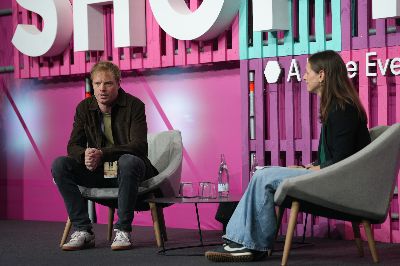
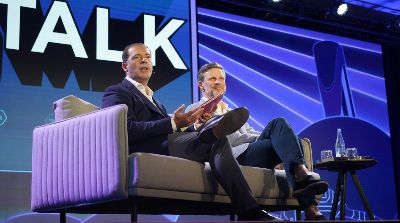
Speaking with Alex Rezvan, founder of The Retail Podcast, Oloman discussed the company's latest expansion and its ambition to make rapid, local delivery a more realistic proposition for fashion retailers.
NIFT, short for Need It For Tonight, describes its consumer proposition as something similar to Deliveroo for quality fashion and retail. Alongside its marketplace, the company provides technology that integrates into retailers' checkouts, allowing them to offer 90-minute and same-day delivery.
Its latest move takes that proposition beyond software. NIFT has partnered with Westfield White City to launch NIFT Logistics, operating from a new 12,000 sq ft warehouse in London.
The strategy addresses one of the persistent contradictions in modern retail. Consumers increasingly expect immediacy, but many brands cannot afford to position inventory anywhere near the consumers demanding it.
NIFT Wants to Close Fashion's Convenience Gap
The name Need It For Tonight describes the problem NIFT was created to solve. A consumer discovers an outfit online at lunchtime. They need it for dinner. Traditional e-commerce cannot necessarily help, and going into a store may not be convenient.
NIFT's fastest delivery option is designed to get the product to the customer in 90 minutes, with real-time tracking available for the delivery journey. But the company's proposition is not simply about speed. Oloman emphasised curation as a central part of the platform. NIFT works across independent boutiques and more established premium names, with fashion for men and women alongside children's products and other selected categories.
That distinction matters. Rapid delivery has already become familiar in food and grocery, where convenience often dominates the purchasing decision. Fashion works differently. Customers still care about discovery, style, brand and trust. NIFT is therefore attempting to combine two propositions that have traditionally existed separately: the immediacy of on-demand commerce and the curation of premium retail.
The Store Is Becoming a Fulfilment Centre
NIFT's original model already reflects a major shift happening across omnichannel retail. Stores are no longer simply destinations where transactions happen. They are increasingly part of the fulfilment network.
Oloman explained that when NIFT works with retailers that have physical locations, it aims to turn those stores into "mini fulfilment centres", allowing inventory already sitting close to customers to support faster, more localised delivery.
The logic is compelling. Traditional e-commerce often separates the store network from digital fulfilment. A retailer might have exactly the product a customer wants sitting three miles away, yet fulfil an online order from a distribution centre hundreds of miles away. That can create longer delivery times, additional logistics costs and duplicated inventory.
Five Things Friday
Five useful signals from the people shaping global retail. Every Friday.
Local fulfilment attempts to collapse that distance. For retailers with large physical estates, stores potentially become a competitive advantage against pure-play e-commerce businesses. But that creates another problem. What happens to brands without stores?
NIFT Logistics Gives Storeless Brands a London Presence
This is where NIFT's new warehouse becomes strategically interesting. Oloman said conversations with brands repeatedly exposed the same challenge. Many companies want access to London's enormous consumer market but do not operate physical stores in the capital.
Holding inventory in London is expensive. As a result, stock may instead be stored in logistics locations such as Milton Keynes or further north, making genuinely rapid London delivery much harder to offer.
NIFT Logistics is designed to close that gap. Instead of requiring every brand to establish its own London warehouse or store, NIFT can provide a shared logistics layer from which products can be fulfilled locally.
That potentially changes the economics of rapid delivery. A retailer does not necessarily need a flagship on Oxford Street or its own expensive urban warehouse to offer London customers a fast fulfilment proposition. It needs inventory positioned close enough to the customer and infrastructure capable of getting it to them. NIFT wants to provide that infrastructure.
The Next Battleground Is Inventory Proximity
Much of e-commerce's first phase was about assortment: who could offer the greatest choice online? The next phase is increasingly about where that inventory physically sits.
That may sound like a logistics question, but it has become a customer-experience question. The closer inventory is to demand, the easier it becomes to offer same-day delivery, 90-minute delivery, later order cut-offs, more accurate stock visibility and potentially more efficient returns.
For fashion retailers, the implications are particularly significant. Fashion purchases are frequently linked to moments: a dinner, an event, a holiday, a date, a last-minute change in weather, a forgotten item or a wardrobe emergency. In those circumstances, the competitive alternative to rapid delivery is not necessarily another e-commerce website. It may be the nearest physical store.
NIFT's proposition is effectively an attempt to give e-commerce some of the immediacy traditionally reserved for physical retail.
The Last Mile Has to Match the Product
Delivering premium fashion at speed also creates a different operational challenge from delivering dinner. During the conversation, Rezvan and Oloman joked about the idea of an expensive dress arriving immediately after the same courier had delivered takeaway food.
Behind the humour is an important customer-experience issue. The delivery experience needs to reflect the value and expectations surrounding the product. NIFT has built technology that allows it to work with different courier networks rather than relying on a single last-mile provider.
For premium retailers, that final touchpoint matters. A brand can spend years creating an elevated digital experience, premium packaging and carefully controlled merchandising. If the final 100 metres of the customer journey feel unreliable or inappropriate, the brand does not get to separate itself from the experience. To the customer, it is all one transaction.
UK Retail's Definition of Value Is Changing
NIFT was only one part of a broader UK retail discussion between Rezvan and Oloman. Another centred on value. Consumers remain price-conscious, but the discussion highlighted a growing problem with treating low price as the complete value proposition.
"Price alone won't win it," Oloman argued during the conversation about the value sector.
That observation has implications well beyond discount retail. Value can mean price, but it can also mean convenience, quality, experience, reliability, time saved, assortment, service or confidence that the product will perform as expected.
NIFT itself is arguably an example of that expanded definition. A customer paying for a fashion item to arrive within 90 minutes is not necessarily seeking the lowest-cost transaction. They are placing economic value on time. Retailers increasingly need to understand which version of value their customer is actually buying.
The Value Sector Still Needs an Experience
The conversation contrasted different approaches to discount retail, including the challenges facing Poundland, which was put up for sale again less than a year after its £1 rescue by Gordon Brothers, and the expansion of European value retailer Action.
Oloman's broader point was that consumers do not abandon expectations around the shopping environment simply because they are looking for low prices. They still want stores that feel organised, usable and pleasant enough to shop.
That creates a strategic challenge for retailers competing heavily on price. Cost discipline is essential, but reducing cost so aggressively that the experience deteriorates can undermine the proposition. Action, which opens around 350 stores a year across Europe, has demonstrated that value retail can coexist with a consistent and navigable store environment. Cheap and valuable are not necessarily the same thing.
Harvey Nichols Raises a Different Question About Retail Value
At the opposite end of the market, the conversation turned to Harvey Nichols and the future of luxury department stores. Frasers Group has acquired Harvey Nichols out of administration. Oloman and Rezvan discussed what that could mean for the retailer's physical estate and brand, drawing comparisons with previous Frasers acquisitions including House of Fraser, Jack Wills and Matches.
After Frasers bought House of Fraser, around 50 stores eventually closed. Jack Wills survived its acquisition. Matches was placed into administration by Frasers less than three months after its purchase.
Some of their discussion was explicitly speculative, particularly around which stores might ultimately remain open or how individual properties could be used. But the underlying question is significant. What is a heritage retail brand actually worth? Its name, its customer relationships, its supplier network, its flagship properties, its digital audience, or the cultural status attached to the brand?
Luxury department stores occupy valuable locations and possess enormous brand recognition, but they also face a retail landscape in which luxury brands increasingly control their own direct distribution. The winners will need to demonstrate that they contribute something beyond simply putting multiple brands under one roof.
IKEA Brings Resale Inside Its Own Ecosystem
The final major shift discussed on the podcast came from IKEA. The furniture retailer has launched a resale initiative across Spain, Norway, Portugal, Poland, Sweden and the UK, recognising a secondary market that has existed around its products for years.
Customers already buy and sell used IKEA furniture through third-party platforms including Gumtree, Facebook Marketplace and eBay. Instead of ignoring that behaviour, IKEA is bringing more of it into its own ecosystem. Oloman described the strategy as a smart way of responding to an existing consumer behaviour rather than pretending the resale market does not exist.
That represents a broader change in how retailers think about ownership. Historically, the relationship ended when the product left the store. Increasingly, retailers want to participate in the entire lifecycle: first sale, use, repair, resale and second ownership. For a brand with products already circulating heavily through secondary marketplaces, bringing resale closer to the core ecosystem can create new customer relationships while strengthening the brand's sustainability proposition.
Four Stories, One Bigger Shift
At first glance, NIFT, value retail, Harvey Nichols and IKEA resale appear to have little in common. One is about rapid fashion delivery. Another is about discount retail. Another concerns luxury. The last is about second-hand furniture.
But all four point towards the same underlying transformation. Retailers are being forced to reconsider where value is created after the product itself is no longer enough.
For NIFT, value is speed and curation. For discount retailers, it is price combined with an acceptable experience. For luxury department stores, it is brand equity, service, destination and access. For IKEA, it increasingly extends beyond the first transaction into the product's second life.
The old model of retail was comparatively straightforward: put the right product in the right place at the right price. The new model adds another requirement: deliver it in the way the customer considers most valuable.
NIFT's Bigger Opportunity Is Not Just Faster Delivery
That is what makes NIFT's expansion worth watching. The headline is a 12,000 sq ft London logistics hub and delivery in as little as 90 minutes. But the larger idea is about restructuring the relationship between digital retail and physical inventory.
Stores can become fulfilment nodes. Warehouses can give digital-first brands a local presence. Courier networks can become interchangeable infrastructure. Checkout technology can turn rapid fulfilment into an option embedded directly inside the retailer's existing journey. And consumers can potentially shop online with an immediacy previously associated with walking into a store.
The question is whether shoppers will demand that level of speed frequently enough for retailers to make the economics work at scale. But consumer expectations rarely move backwards. Once same-day became normal, next-day felt slower. Once groceries could arrive within an hour, scheduled delivery felt less convenient. Fashion may be heading towards the same expectation reset.
NIFT is betting that the future of e-commerce will not simply be about having the product consumers want. It will be about having that product close enough to deliver when they actually want it. And sometimes, as the company's name makes clear, they need it for tonight.
Related coverage
Last Mile
Frasers, Tesco, Nike and FairPrice Reveal the New Battle for Retail Control
Aug 11, 2026
E-Commerce
Pinterest adds Compare and Wishlists for holiday shoppers
Nov 17, 2026
E-Commerce
Zalando opens its app to other online shops' products
Nov 6, 2026
E-Commerce