ReturnPro's Sender Shamiss: Retail's $890 Billion Returns Problem Has Become a Margin Opportunity
US merchandise returns reached roughly $890 billion in 2024, about 16.9% of retail sales. ReturnPro CEO Sender Shamiss argues retailers must prevent avoidable returns, detect fraud, route returned inventory intelligently and resell recovered products rather than losing value in the reverse supply chain.
- 1US merchandise returns hit roughly $890 billion in 2024, about 16.9% of retail sales, making recovered value a direct lever on thin retail margins.
- 2Around 90% of returned clothing can go back on the shelf, while fewer than 4% of some electronics returns can do so without human intervention, which is why AI-led routing across a physical network matters.
- 3With 77% of shoppers factoring returns policies into purchase decisions, the goal is fewer unnecessary returns rather than harder returns.
Returns have long been treated as the unwanted end of the retail journey. ReturnPro CEO and co-founder Sender Shamiss argues that this thinking is increasingly untenable. As e-commerce pushes return volumes higher and retailers fight for margin, the industry needs to prevent unnecessary returns before purchase, identify fraud, intelligently route returned inventory and find ways to put products back into circulation rather than allowing value to disappear through the reverse supply chain.
For years, retail executives obsessed over everything that happened before the sale.
Merchandising, marketing, conversion, fulfilment and customer acquisition dominated the conversation.
What happened when the product came back was often somebody else's problem.
According to Sender Shamiss, CEO and co-founder of ReturnPro, that attitude is finally changing.
Speaking with Alex Rezvan, Founder of The Retail Podcast, Shamiss described returns as historically being treated like retail's "black sheep", an operational problem hidden somewhere between warehouses, logistics teams, merchants and finance departments.
Today, the economics are becoming too significant for executives to ignore.
Shamiss put annual US merchandise returns at roughly $890 billion in 2024, representing approximately 16.9% of all US retail sales, according to the National Retail Federation. His central argument is that when many retailers are operating on relatively thin margins, recovering even a fraction of the value lost through returns can have an outsized impact on profitability.
That is turning reverse logistics from a back-office headache into a boardroom conversation.
And for ReturnPro, it has also prompted a clearer definition of the business itself.
From The Recon Group to ReturnPro
The company now known as ReturnPro was co-founded by Shamiss in 2008. The business evolved through several identities, beginning as The Recon Group, then TRG, then goTRG, before rebranding to ReturnPro in 2024.
Shamiss said the evolution reflected the business itself.
Five Things Friday
Five useful signals from the people shaping global retail. Every Friday.
ReturnPro began primarily in logistics before expanding into software, e-commerce and the broader returns ecosystem.
After 16 years of trying to articulate increasingly complicated mission statements, the company eventually arrived at two words: solving returns.
The ReturnPro name followed.
"We are a collection of return pros," Shamiss explained, describing the rebrand as a way to give employees, clients and the wider industry a much clearer understanding of the company's purpose.
ReturnPro now services approximately 259 product categories, spanning everything from apparel and consumer electronics to furniture, home goods, power tools and hand tools.
That purpose extends beyond processing a return once a customer has decided to send something back.
ReturnPro's approach instead divides the problem into three stages: pre-purchase, post-purchase and the physical handling of returned goods.
The distinction is important because the cheapest return to process is ultimately the one that never happens.
Why Retail Must Stop Returns Before They Start
The rise of e-commerce has made returns particularly difficult in categories such as apparel.
Customers cannot physically try products before purchasing them, which encourages behaviours such as bracketing, ordering the same item in multiple sizes or variations with the intention of returning those that do not fit.
As online shopping continues taking a greater share of retail sales, Shamiss expects return volumes to remain a structural challenge rather than disappear.
His argument is that retailers need to intervene earlier.
Instead of waiting until a customer clicks return, businesses should ask why the wrong purchase happened in the first place.
Was the sizing information insufficient? Was the product description unclear? Could better technology have helped the customer understand the fit? Could sizing information be made more consistent across retailers and brands?
"How do I stop the return from occurring in the first place?" Shamiss asked.
That reframes returns as a customer-experience and product-information problem as much as a logistics problem.
If retailers can give consumers greater confidence before checkout, they can potentially improve conversion without accepting unnecessary returns as an inevitable cost of e-commerce.
Return Fraud Is the Other Side of the Problem
Not every return is caused by an honest purchasing mistake.
Shamiss distinguishes between organised fraud and behaviours such as wardrobing, buying a product with the intention of using it temporarily and then returning it.
The classic example is a shopper purchasing a dress for an event, wearing it and returning it afterwards.
From the customer's perspective, the product may appear unchanged.
From the retailer's perspective, however, it has triggered shipping, handling, inspection and potentially cleaning or refurbishment costs while also reducing the item's resale potential.
ReturnPro uses what Shamiss described as trusted customer algorithms as part of its response.
Returned products can generate signals about customer behaviour. If an item comes back incorrectly described, is not the product that was expected or presents another discrepancy, that information can feed into the retailer's assessment of the customer.
Large enterprise retailers often operate their own trust systems, Shamiss said, while ReturnPro can provide capabilities for smaller and medium-sized businesses.
The objective is not simply to make returns more restrictive.
It is to differentiate between trusted customers and behaviour that creates disproportionate cost or risk.
That distinction becomes particularly important as retailers try to maintain generous return experiences without leaving themselves unnecessarily exposed to fraud.
A Return Portal Does Not Solve the Problem
Much of the returns technology market has concentrated on the customer-facing portal: select the product, choose a reason, generate a label, send it back.
Shamiss believes that solves only one piece of the puzzle.
ReturnPro deliberately positions itself across the wider process, reducing preventable returns before purchase, supporting the digital return journey after purchase and physically handling products once they re-enter the supply chain.
Because eventually, the software ends.
And a physical product still needs somewhere to go.
According to figures cited by Shamiss, approximately $200 billion is spent on supply-chain costs associated with roughly $900 billion of returns, while recovery is approximately $133 billion. He used those figures to illustrate just how quickly the cost of moving and processing returned merchandise can overwhelm the value recovered from it.
That is where reverse logistics becomes extraordinarily complicated.
When a $20 Streaming Stick Becomes Expensive
A returned garment can often be inspected and put back into saleable inventory relatively easily.
Electronics are different.
Devices may contain personal information, need to be tested, require data to be wiped and have their functionality verified.
Shamiss said that while around 90% of returned clothing can potentially return to the shelf, fewer than 4% of some electronics returns can immediately do the same without human intervention.
Consider a low-cost streaming device worth around $20. Someone still needs to receive it, open it, plug it in, test it, wipe any data, determine its condition and decide where it should go next. At US labour costs, the economics can quickly stop making sense.
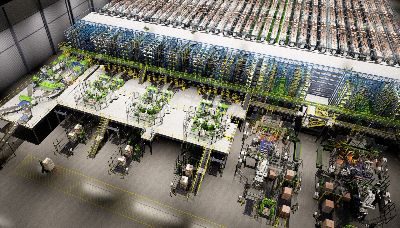
ReturnPro's response is to combine technology with a physical reverse-logistics network. Shamiss described operations spanning facilities in the United States, Canada, Mexico and Southeast Asia, covering approximately 3.7 million square feet devoted to processing products and bringing them back into circulation.
That geographic footprint allows the economics of recovery to influence where a particular product is processed.
AI Decides Whether a Product Is Worth Saving
This is also where machine learning and AI become particularly relevant.
The decision surrounding a returned product sounds simple: what should we do with it?
In reality, the answer may depend on category, original price, current resale value, condition, customer behaviour, labour costs, transportation, processing requirements and the market into which the product could eventually be resold.
ReturnPro uses algorithms and machine-learning capabilities to combine those signals and determine an appropriate route.
A relatively simple, lower-value product might make economic sense to process in Mexico. Another item requiring more work might be routed elsewhere.
The system can incorporate information ranging from category and price to customer sentiment and the expected value of the product after processing.
The ultimate objective, according to Shamiss, is straightforward: bring the product back to life.
ReturnPro wants products returned to the original brand and resold wherever possible rather than pushed automatically towards liquidation or landfill.
Recommerce Turns Returns Into Inventory Again
Not every retailer is equipped to sell returned or refurbished merchandise.
A retailer's e-commerce infrastructure may only understand new inventory. Its merchandising systems may not accommodate secondary-market products. Its brand strategy may never have considered recommerce.
ReturnPro therefore sometimes begins by helping clients move recovered products through other marketplaces.
Over time, Shamiss said, the company can work with brands to develop their own secondary-market capabilities, allowing refurbished or recovered merchandise to be sold within the brand's own environment.
That potentially creates a second customer opportunity from a transaction that initially looked like a loss.
The retailer recovers value. The product receives another life. A more price-sensitive consumer gains access to the brand. And the original retailer can potentially maintain greater control over how its products appear in the secondary market.
That last point is more important than it might seem.
Returns Are Also a Brand-Protection Problem
Returned inventory does not disappear simply because the original retailer no longer wants it.
If poorly managed, significant quantities can eventually surface in secondary channels and markets where brands never intended them to be sold.
Shamiss warned that for some products, the scale of US returns could theoretically exceed normal forward sales in smaller international markets.
Sending large volumes of returned merchandise into those markets could therefore distort pricing, distribution and consumer perceptions of the brand.
That turns reverse logistics into a brand-management issue.
Where does the product end up? At what price? In what condition? Who sells it? Does the volume undermine authorised distribution?
Returns management therefore sits at the intersection of margin, sustainability, customer experience and brand protection.
That helps explain why the conversation is increasingly moving higher inside retail organisations.
Returns Policy Is Now Part of the Purchase Decision
Retailers face a difficult balancing act.
They need to reduce the financial impact of returns without making the purchasing experience so restrictive that customers simply shop somewhere else.
Shamiss cited research indicating that 77% of shoppers factor returns policies into their purchasing decisions.
His view is that consumers ultimately want simplicity and transparency.
They may accept being directed towards specific drop-off points. They may accept some charges under certain circumstances. But introducing unexpected fees or complicated insurance arrangements risks damaging the customer relationship.
For omnichannel retailers, physical stores also provide an important advantage.
A shopper who buys online may prefer to return the product to a familiar retail location rather than an anonymous logistics facility.
And once the customer enters the store, the return can potentially become another commercial interaction.
The challenge is therefore not to make returns painful enough that customers stop returning products.
It is to make the entire system intelligent enough that unnecessary returns decline while legitimate returns remain convenient.
Returns Touch Almost Every Part of Retail
One reason the industry has struggled with returns is organisational.
Retail businesses are traditionally departmentalised across supply chain, transportation, merchandising, stores, e-commerce, finance, brand and customer service.
Returns touch almost all of them.
A merchant negotiating terms with a supplier can influence the economics of returns before the product even reaches the customer. E-commerce teams influence whether customers make informed purchases. Stores may become return locations. Supply-chain teams handle the physical product. Finance absorbs the cost. Brand teams ultimately care where the returned inventory ends up.
Yet those functions do not always operate around a single returns strategy.
Shamiss believes this will have to change as executives increasingly recognise the potential impact on net margin.
He even raised the possibility that large retailers could eventually create dedicated senior positions, perhaps a Chief Returns Officer or another executive role, responsible for connecting those functions.
It may sound unusual today.
But returns themselves are unusually cross-functional.
AI Could Connect the Entire Returns Lifecycle
The next stage of the industry, according to Shamiss, will increasingly depend on machines making decisions at a scale humans cannot realistically manage.
Retailers may be dealing with tens of millions of UPCs, multiple categories, varying recovery values, different processing costs and constantly changing resale opportunities.
Determining the optimal disposition for every item manually would be extraordinarily difficult.
Machine learning and AI agents can increasingly evaluate smaller components of that decision, combine multiple signals and help determine where inventory should go.
For Shamiss, the real disruption comes from the ability of machines to thread those decisions together, alongside growing recognition at C-suite level that returns need to be treated strategically.
That combination may finally move returns out of retail's back room.
From Retail's Biggest Headache to Margin Upside
Returns are unlikely to disappear.
Nor, if e-commerce keeps growing, will the structural pressures that accompany them.
Consumers will order the wrong size. Products will arrive and fail to meet expectations. Fraud will happen. Electronics will need testing. Inventory will need transporting.
The opportunity is not to pretend those realities can be eliminated.
It is to manage them far more intelligently: prevent the avoidable return before purchase, identify potentially fraudulent behaviour without punishing good customers, make the return itself straightforward, determine the optimal destination for the physical product, recover as much value as possible, keep viable products in circulation, protect the brand in secondary markets and connect all of those decisions back to the retailer's margin.
That is the bigger idea behind ReturnPro's proposition.
For years, retailers concentrated overwhelmingly on optimising the journey towards the sale.
The next source of competitive advantage may come from becoming equally sophisticated about the journey in the opposite direction.
Because a returned product does not have to represent the end of its value.
Managed correctly, it can become inventory again.